Most event budget advice is useless. It tells you to “get quotes” and “track spending” as if that’s a revelation. The real savings aren’t found in spreadsheets; they’re secured in strategic decisions made months before your first guest arrives. To reduce event expenses, you must ruthlessly prioritize goals, master vendor negotiations with specific tactics, and leverage technology to automate and eliminate costs. An unrealistic budget is just a list of things you can’t have. A strategic budget is a roadmap to a successful event without financial regret. By the end of this guide, you will have a clear, actionable framework to cut costs on your next Lagos event.
Before you begin, gather these essentials:
- A clear statement of your event’s primary goal (e.g., fundraising, brand awareness, celebration).
- A list of “must-have” elements vs. “nice-to-have” elements.
- Initial research on typical costs for venues, catering, and entertainment in Lagos.
- A dedicated person or small team responsible for the budget.
Step 1: Define Your Event Goals and Priorities
Stop thinking about what you want to spend and start with what you want to achieve. Is this a wedding meant to be a once-in-a-lifetime celebration for 500 guests? Is it a corporate event to launch a new product? The goal dictates the budget. An event to impress high-value clients has different financial priorities than an internal team-building day.
Create a simple list of priorities. If the guest experience with food is #1, you allocate a larger portion of your funds there and look for savings elsewhere, perhaps on elaborate floral arrangements. If the goal is lead generation, the budget might favor networking technology and a high-profile speaker over a lavish dinner. This single act of prioritization will clarify nearly every spending decision you make later. Without it, you’ll try to make everything perfect and end up making nothing exceptional while blowing your budget.
Step 2: Understanding Your Event Budget Breakdown
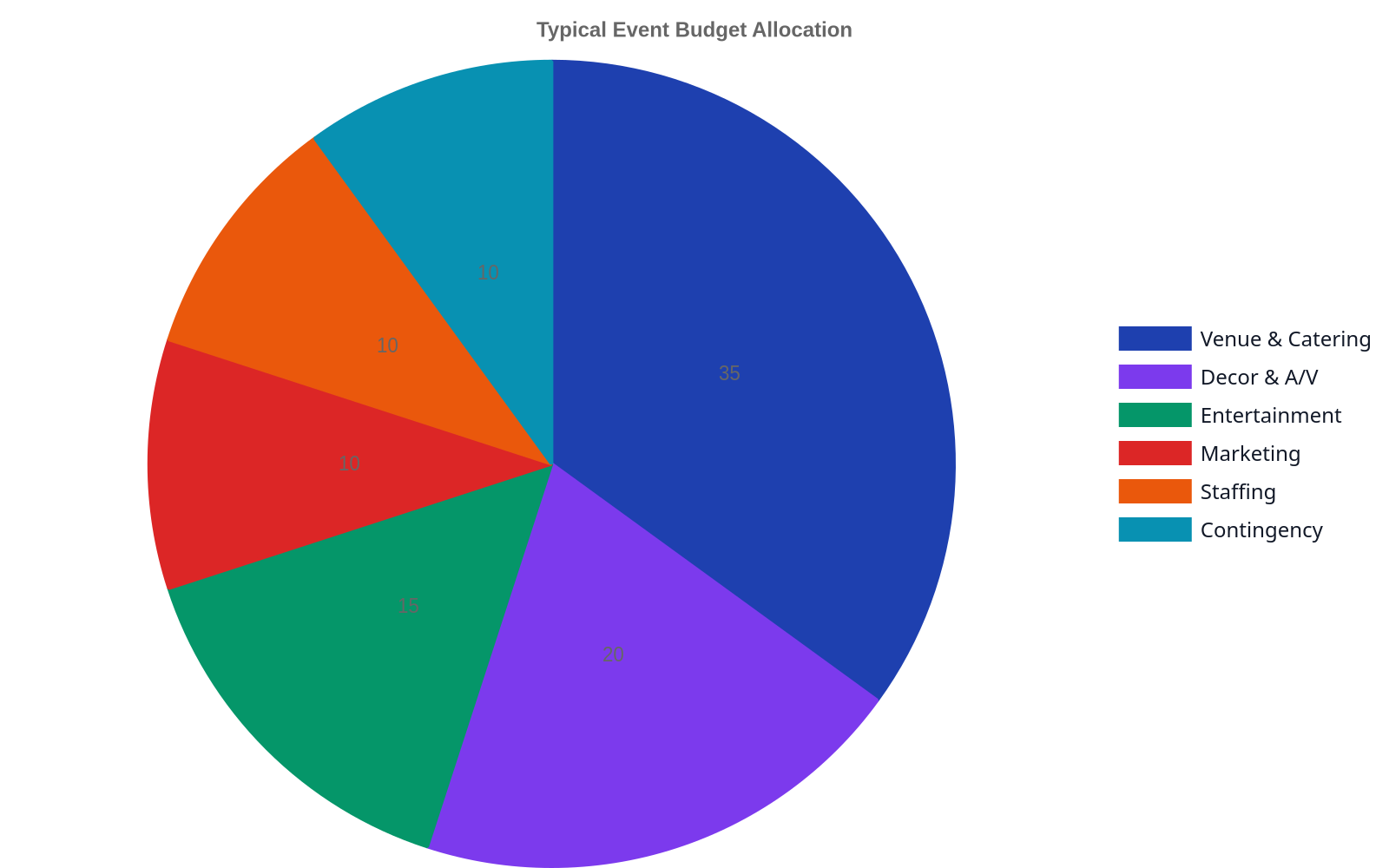
Once you have your priorities, you can build a realistic budget. A typical event budget in Lagos has several key categories. While percentages fluctuate based on the event type, a common breakdown gives you a starting point. For a ₦5,000,000 event, you might see:
- Venue Rental (30-40%): ₦1,500,000 – ₦2,000,000. This is often the biggest single expense. Look for venues with clear pricing and no hidden fees.
- Food & Beverage (25-35%): ₦1,250,000 – ₦1,750,000. This is heavily dependent on your guest count and menu complexity.
- Entertainment/Speakers (10-15%): ₦500,000 – ₦750,000. This includes DJs, live bands, MCs, or keynote speakers.
- Marketing & Promotion (5-10%): ₦250,000 – ₦500,000. For public events, this includes ads, social media, and PR.
- Staffing (5-10%): ₦250,000 – ₦500,000. This covers planners, coordinators, security, and ushers. Some venues provide staff, which can be a significant saving.
- Contingency Fund (10-15%): ₦500,000 – ₦750,000. This is non-negotiable. You will have unexpected costs. A contingency fund of 15-20% is recommended for unforeseen circumstances, especially for large-scale events.
Step 3: Forecast Attendance to Control Variable Costs
Inaccurate attendance forecasting is a primary cause of budget overruns, especially for food and beverage. For free events, industry data suggests an average attendance rate of around 50% of those who RSVP. For paid events, the no-show rate is lower but still present.
Don’t just guess. Look at historical data from similar past events if you have it. If not, be conservative. It is far better to have a few people on a waitlist than to pay for 100 plates of jollof rice that go uneaten. Work with your caterer on a guaranteed minimum number of guests, and set the deadline for that number as close to the event date as possible. This gives you maximum time to collect RSVPs and adjust.
Step 4: Research Vendors and Gather Competing Quotes
Never accept the first quote you receive. For any service costing more than ₦100,000, you should get at least three competing proposals. When you request a quote, be incredibly specific. Don’t ask for “a quote for catering.” Ask for “a quote for a buffet-style dinner for 300 people, including three proteins, two starches, two salads, small chops, and non-alcoholic beverages, with service staff for four hours.”
The more detailed your request, the more accurate the quote and the easier it is to compare proposals apples-to-apples. This process also helps you identify vendors who are responsive and professional. A venue with vendor-friendly policies can make this process smoother, as they won’t restrict your choices or charge exorbitant fees for using outside suppliers. This is a core part of our approach at Regal Castle, as it provides clients flexibility and control over their budget.
Step 5: How to Negotiate with Vendors for Better Rates

Negotiation is not about bullying a vendor into an unsustainable price. It’s a professional conversation to find a mutually beneficial agreement. The best way how to reduce event expenses is to be a good partner. Start by knowing the market rate. Your research in Step 4 gives you this power.
Here is a simple process:
- Always Be Respectful: Vendors are business owners, not adversaries. A good relationship can lead to better service and future discounts.
- Share Your Budget: If a quote comes in too high, be transparent. Say, “Your proposal looks fantastic, but it’s about 15% over our budget of ₦X for this category. Is there any way we can work together to get closer to our number?”
- Negotiate on Scope, Not Just Price: If the price won’t budge, can the value increase? Ask if they can include an extra hour of service, upgrade the lighting package, or add a complimentary feature. 4. Offer Something in Return: Can you offer early payment? Can you guarantee a certain number of guests? Can you promote them on your social media channels? A non-cash incentives can be surprisingly powerful in negotiations.
Step 6: Negotiating with Vendors: Tips and Tricks
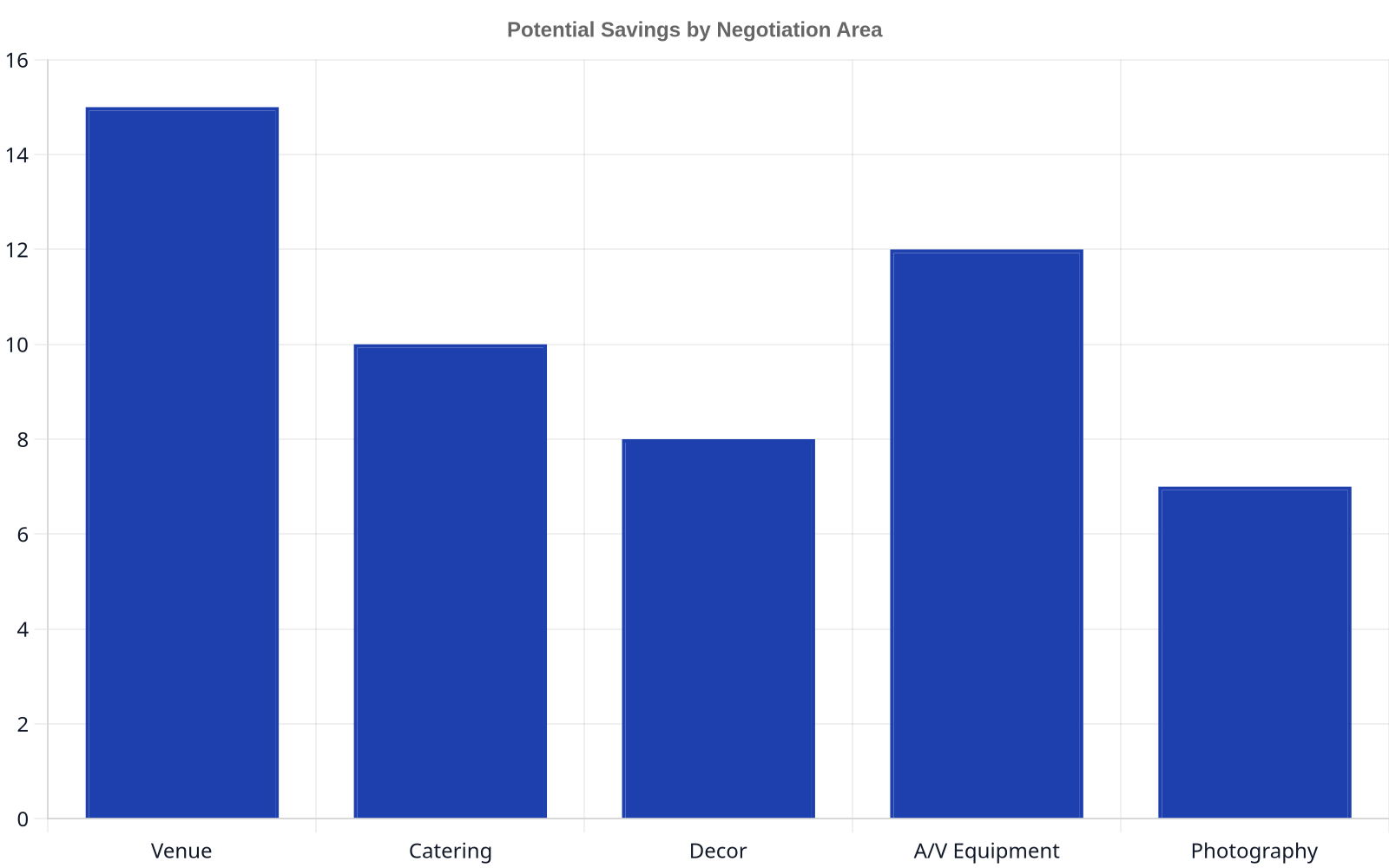
Beyond the process, here are specific tactics for key vendor categories in Lagos:
- Venues: Ask about off-season or weekday discounts. Sunday or Friday events can be significantly cheaper than Saturdays. See if you can use their in-house tables and chairs instead of renting. Our venue, located on Ikotun-Idimu Road, offers both expansive outdoor and indoor spaces, allowing clients to choose what fits their budget without compromising on style.
- Caterers: A buffet is almost always cheaper than a plated dinner due to lower staffing needs. Limiting the number of protein options can also drastically cut costs. Ask if you can provide your own drinks, as the markup on beverages is substantial.
- AV/Tech: Does the venue have a built-in sound system? Using it is cheaper than renting a full PA. Do you really need complex lighting for a daytime conference? Scale the technology to the event’s actual needs.
Don’t just ask for a discount. Ask what drives their cost. Understanding that staffing for a plated dinner is the real expense—not the chicken itself—is what allows you to find creative, acceptable alternatives like a high-end buffet.
Step 7: DIY vs. Professional Services: Where to Save
| Aspect | DIY | Professional Services | |
|---|---|---|---|
| Upfront Cost | Lower | Higher | — |
| Time Commitment | High | Low | — |
| Quality/Expertise | Variable | Consistent/High | — |
| Stress Level | Higher | Lower | — |
| Customization | High | Moderate | — |
Doing things yourself can save money, but it always costs you time and potentially quality. Be honest about your skills and your team’s capacity.
- Good DIY Candidates: Invitations (using services like Canva), simple centerpieces, creating playlists (instead of hiring a DJ for the entire night), and event promotion via social media.
- Where to Hire Professionals: Photography/videography, catering, and complex technical production. A bad photo is forever, and food safety is not a corner you want to cut. Hiring an expert for critical roles is an investment, not an expense. Many people think they can manage the entire event themselves, but often benefit from some professional guidance. Our Event Planning Assistance service is designed to help clients navigate these decisions, ensuring they save money without sacrificing quality.
Step 8: Utilizing Technology for Event Management Savings

Technology can be a huge budget-saver when used correctly. Instead of expensive printed invitations and manual RSVP tracking, use free or low-cost event management platforms. Tools like Eventbrite or Tix.africa can handle ticketing, registration, and communication for a small fee, saving you countless hours of administrative work.
For hybrid events, using virtual tools can drastically reduce costs associated with venue capacity and catering for remote attendees. Even simple tools like Google Forms for RSVPs or WhatsApp for coordinating with volunteers can replace more expensive software. The key is to evaluate what you actually need. Don’t pay for a complex platform with 100 features when a free tool with five features will do the job perfectly.
Step 9: Track Everything and Manage Your Contingency Fund
Your budget is a living document, not a one-time setup. Use a simple spreadsheet (Google Sheets is a great free option) to track every single expense as it’s incurred. Compare your actual spending against your budgeted amount for each category in real-time.
This is where your contingency fund comes in. If your decor costs come in ₦50,000 over budget, you must immediately deduct that ₦50,000 from your contingency line item. This prevents a small overage from turning into a major blowout. The contingency fund is for unexpected costs—like a generator failing or needing extra security—not for accommodating poor planning. Keep it locked until a true emergency arises.
A budget isn’t a financial prison. It’s a tool that gives you the freedom to spend on what truly matters by forcing you to be disciplined about what doesn’t.
Step 10: Conduct a Post-Event Analysis for Future Savings
Within two weeks of your event, gather your team and review the budget. Where were your forecasts accurate? Where were you completely off? Did you spend the entire contingency fund? If so, what surprises came up?
This analysis is invaluable for the next event you plan. You’ll learn that you always underestimate the cost of transportation or that your attendance forecast was 20% too high. Document these findings. Repurpose materials where possible. Can banners be redesigned? Can leftover non-perishable items be stored? According to a guide on sustainable events by the Events Industry Council, repurposing materials is a key strategy for both cost savings and environmental responsibility. This step turns the cost of one event into an investment in making the next one more efficient.
Troubleshooting Common Budget Blowouts
- Problem: A key vendor increased their price last minute.
* Solution: Your contract is your protection. Ensure all agreements are in writing and include clauses that lock in pricing. This is a critical legal consideration to minimize financial risk.
- Problem: More guests showed up than expected.
* Solution: While a good problem to have, it can strain your budget. Your caterer contract should have a per-person price for overages. Your real-time budget tracking will show if you can absorb this from the contingency fund.
- Problem: You are running out of your contingency fund with weeks to go.
* Solution: It’s time to make hard cuts. Revisit your priority list from Step 1. What “nice-to-haves” can be eliminated completely? Can you scale back the menu? Reduce decor? This is painful but necessary.
Planning an event on a budget is about making smart, informed choices from the very beginning. By following these steps, you can host a memorable and impactful event in Lagos without the financial stress.
FAQ
How much should I budget for a contingency fund?
For first-time events with many unknowns, aim for the higher end of that range.
What are the most common hidden costs in event planning?
Costs and outcomes vary widely by scope — ask providers for figures specific to your situation.
Is it cheaper to have an event on a weekday?
Yes, holding an event on a weekday—particularly a Monday through Thursday—can be significantly cheaper. Venues and some vendors offer lower rates for non-peak days as they are in lower demand compared to Saturdays.
How can I save money on event marketing?
Lean heavily on free channels. Create a social media campaign, encourage speakers and sponsors to promote the event to their networks, and send announcements to your own email list. Collaborating with local media or influencers for coverage can also provide free publicity.
Can I negotiate with every event vendor?
While most vendors have some flexibility, some prices might be fixed. You can almost always negotiate on scope, if not on the final price. Focus your efforts on the highest-cost items like the venue and catering, as even a small percentage discount there will yield the largest Naira savings.
What technology offers the best ROI for event cost savings?
Event management software often provides the best return on investment. Platforms that handle registration, ticketing, and attendee communication in one place can save dozens of hours of manual labor, which is a direct cost saving if you would have otherwise paid staff for that time.
How do I use volunteers effectively to save on staffing costs?
Create clear roles and responsibilities for volunteers well in advance. Use them for tasks like registration, directing guests, managing microphones for Q&A, and monitoring sessions. A well-organized volunteer team, managed by one paid coordinator, can significantly reduce staffing expenses.