Forget the generic checklists you find online. Most are written for Western weddings and completely miss the nuances of planning a vibrant, large-scale Nigerian celebration. A successful wedding planning list isn’t just a series of tasks; it’s a strategic roadmap that balances family expectations, modern trends, and your personal budget. Your list must account for cultural traditions, vendor negotiations specific to the Lagos market, and the sheer scale of the guest list. This guide provides a detailed, month-by-month wedding planning list tailored for a Nigerian context, ensuring no detail is overlooked, from booking the venue to post-wedding thank you’s. For a comprehensive guide, plan your Lagos wedding with our 12-month checklist.
This list was created by ranking tasks based on vendor booking lead times in the Lagos market and dependency, meaning tasks that block other decisions are prioritized first. We consulted with our internal event planning team, who have assisted with hundreds of weddings, and cross-referenced their experience against common timelines to create a practical, step-by-step guide for Nigerian couples.
12+ Months Out: Laying the Foundation
This is the strategic phase. The decisions you make now will shape your entire wedding. It’s less about cake tasting and more about core logistics. The goal is to set the three pillars of your wedding: budget, guest count, and vision. Get these right, and the rest of the process becomes significantly smoother.
First, set a realistic budget. This is the most critical conversation you will have. In Nigeria, this often involves multiple family stakeholders, so clarity on who is contributing what is essential. A typical Nigerian wedding can have costs that are significantly different from western weddings, so using online calculators designed for other markets will not work. You need to have frank discussions about what is feasible. Then, define your wedding vision. Are you picturing a traditional ceremony with deep cultural roots, a modern glam affair, or a blend of both? This vision will inform your choice of colours, attire, music, and even your venue. Finally, estimate your guest count. A wedding for 300 people is a different logistical operation than one for 800. Our venue, for instance, has a capacity for 500-1000 guests, which is a common range for Lagos weddings. This number will directly impact your venue choice and catering costs. According to The Knot, the average cost of a wedding is between $30,000 and $35,000, which can be a useful, if rough, benchmark when converted and adjusted for the local context.
- Best for: Couples who want to start their planning with a strong, unshakeable foundation and avoid major revisions later.
- Watch out for: Underestimating your guest list. It’s better to start with a high estimate and trim down than to have to find a new venue because your list grew unexpectedly.
Understanding Your Wedding Budget
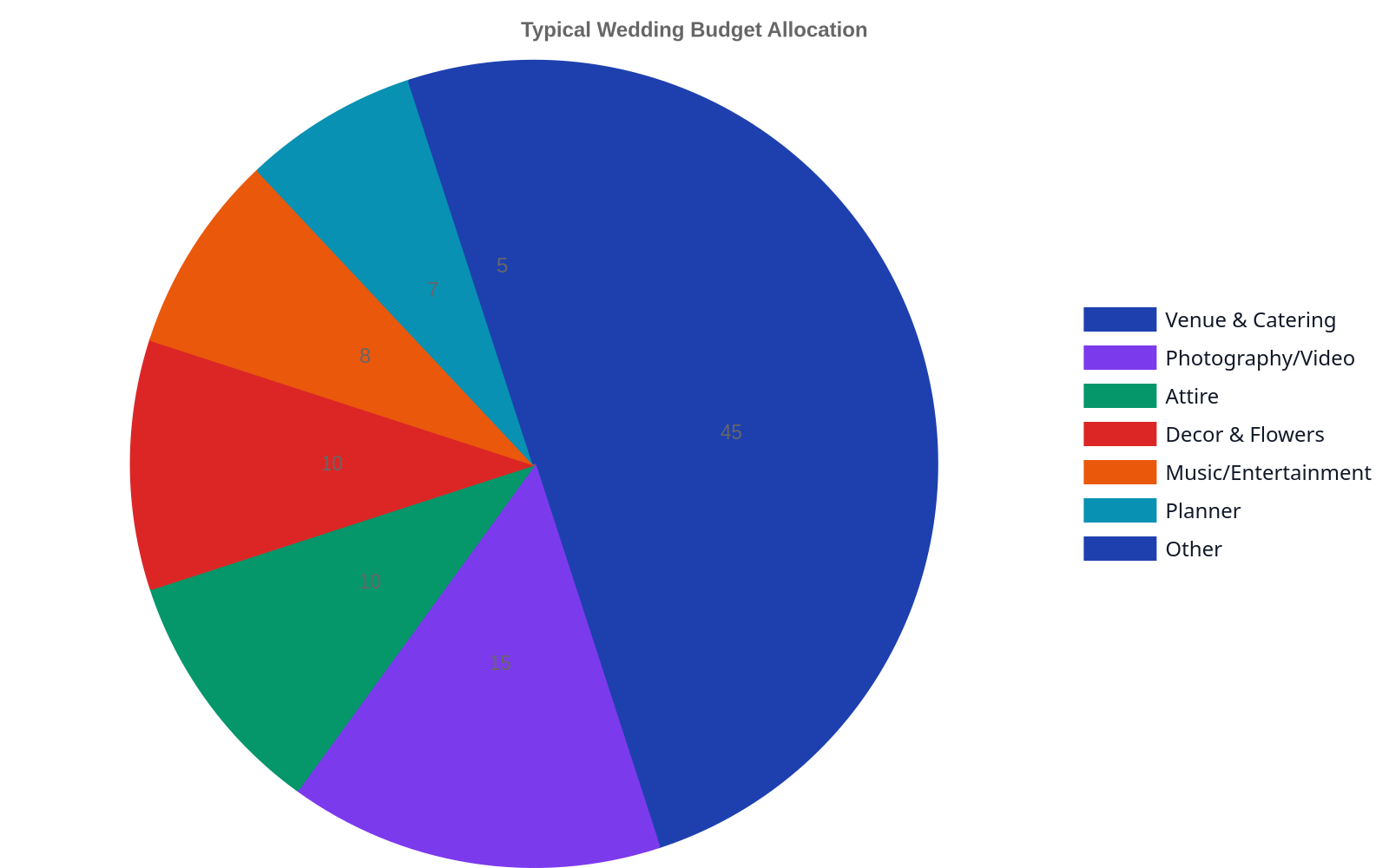
Allocating your budget correctly is the key to a stress-free planning experience. One of the biggest mistakes couples make is not breaking down their total budget into specific categories. It’s not enough to have a total figure; you need to decide what percentage goes to the venue, catering, attire, decor, and other key areas. In Nigeria, for example, food and venue often take up the largest slice of the budget.
Flowers and decor typically account for about 8 to 10 percent of the total wedding spend. Understanding these benchmarks helps you make informed decisions. If you decide to splurge on a high-end decorator, you know you might need to pull back from another category, like entertainment or transportation. Create a detailed spreadsheet from day one and track every single expense. This isn’t the most glamorous part of wedding planning, but it is the most important. It prevents overspending and ensures you can afford everything you’ve dreamed of.
- Best for: Couples who are detail-oriented and want full control over their wedding finances.
- Watch out for: “Miscellaneous” costs. Assign every Naira to a specific category. Unassigned funds have a way of disappearing without a trace.
10-11 Months Out: Booking Your Key Vendors
With your budget, vision, and guest list estimate in hand, it’s time to book the suppliers who are in highest demand. In a bustling city like Lagos, the best venues and photographers are often booked more than a year in advance. This is not a step to procrastinate on. Start by touring wedding venues. Look for a location that not only matches your aesthetic but also has the logistical capacity to handle your guest count and technical requirements. For example, our facility on Ikotun-Idimu Road is designed to accommodate large-scale events, which is crucial for many Nigerian weddings.
Once the venue is secured and the date is locked in, immediately book your photographer, videographer, and DJ or band. These vendors can only be at one place at a time, and their calendars fill up fast. When evaluating them, go beyond their Instagram feeds. Ask to see a full wedding gallery or video, not just a highlight reel. For musicians, ask for a song list and see if they can perform specific cultural or religious music that is important to you. A great photographer does more than take pictures; they capture the emotion and energy of your day. This is one area where you don’t want to compromise.
- Best for: Proactive couples who want to secure their top-choice vendors without stress.
- Watch out for: Vendors who are not responsive. If they are slow to reply to an initial inquiry, imagine what it will be like when you have an urgent question closer to the date.
8-9 Months Out: Assembling Your Team and Attire
This period is about choosing the people who will stand beside you and deciding what you will wear. First, choose your wedding party: your bridesmaids and groomsmen. These should be your most trusted friends and family members who you know will support you throughout the process. Don’t choose people out of obligation; choose them because you can’t imagine your day without them.
Next, begin the search for your wedding dress and traditional attire. Shopping for a wedding dress is a major milestone. Start by researching designers and styles online, but give yourself plenty of time for boutique appointments and fittings. It can take months for a dress to be ordered and altered. For Nigerian weddings, this is also the time to decide on and commission your traditional outfits. This often involves selecting Aso-Ebi for your families and guests, which requires significant coordination. According to some experts with over 10 years in the industry, coordinating Aso-Ebi for a large wedding can be a project in itself.
Don’t just look at a vendor’s highlight reel. Ask to see a full, unedited gallery from a single wedding. The real measure of a photographer isn’t their one perfect shot; it’s their ability to capture an entire day beautifully, from the chaotic getting-ready moments to the last dance.
- Best for: Couples ready to make the personal and stylistic decisions that bring their wedding to life.
- Watch out for: Delays in ordering attire. Custom gowns and traditional outfits take time, so order them at least eight months out to avoid rush fees and stress.
6-7 Months Out: Guest Logistics and Invitations
Now the focus shifts to your guests. Finalize your guest list and begin gathering contact information. This can be a surprisingly time-consuming task, so start early. Once the list is firm, it’s time to think about invitations. Your invitation is the first glimpse your guests will have of your wedding style, so choose a design that reflects your vision. Whether you opt for elaborate physical invitations or a modern digital approach, ensure all the key details are clear: date, time, venue address, and RSVP instructions.
This is also the time to book hotel blocks for out-of-town guests and arrange for transportation if needed. In a city with traffic like Lagos, providing a shuttle from a central hotel to the venue can be a much-appreciated gesture. Don’t forget the legalities. Research the requirements for obtaining a marriage license in your state. This administrative task is easy to forget amidst the more exciting planning elements, but it’s non-negotiable.
- Best for: Couples who are ready to formalize their plans and communicate them to their guests.
- Watch out for: Not ordering enough invitations. Always order at least 15-20 extra to account for last-minute additions and keepsakes.
4-5 Months Out: Fleshing Out the Details
With the major pieces in place, you can now focus on the finer details that will make your wedding unique. This is the time for menu tastings with your caterer, cake tastings with your baker, and finalizing your floral and decor plan. Bring your vision board to these meetings to ensure all your vendors are aligned on the aesthetic. This is a fun and creative phase, but it requires decisive action.
Book your officiant if you haven’t already, and plan the ceremony with them. Will you write your own vows? Will there be special readings or religious traditions you want to include? Also, start planning your honeymoon. Booking flights and accommodations 4-5 months in advance often secures better pricing and availability, especially if you’re traveling to a popular destination. Finally, purchase your wedding rings. This gives you plenty of time for any necessary resizing.
- Best for: Detail-oriented couples who enjoy the creative aspects of planning.
- Watch out for: “Decision fatigue.” There are a lot of choices to make in this phase. Trust the research you did and the vision you set earlier.
2-3 Months Out: Final Arrangements and Confirmations
As the day gets closer, the focus shifts to finalizing every last detail and confirming arrangements with all your vendors. Send out your wedding invitations 8-10 weeks before the wedding date. This gives guests ample time to RSVP and make any necessary travel arrangements. Create a detailed timeline for the wedding day itself, from when hair and makeup starts to the final farewell.
Share this timeline with your venue coordinator, photographer, and other key vendors. A well-communicated plan is the backbone of a smoothly run event. As an event center that offers event planning assistance, we know firsthand that a detailed run-of-show is the single most important document on the wedding day. Confirm all booking details, arrival times, and final payment schedules with your vendors. This is also a good time for the bride to have her first dress fitting.
- Best for: Organized couples who are ready to lock in the final schedule and logistics.
- Watch out for: Last-minute changes from vendors. Get all final confirmations in writing to prevent any misunderstandings.
1 Month Out: The Final Stretch
With just one month to go, it’s all about final confirmations and personal preparations. Follow up on any outstanding RSVPs. You need a final headcount to give to your caterer and venue. Apply for your marriage license now, as there is often a waiting period. Have your final wedding dress fitting and break in your wedding shoes.
Write your thank-you notes for any gifts that have already arrived. It’s much easier to do this as they come in rather than facing a mountain of them after the wedding. Prepare final payments for your vendors; many will require the balance to be paid in the week or two leading up to the event. Put these payments in clearly labeled envelopes to be handed out by a trusted family member or your wedding coordinator on the day. Lastly, take a deep breath. All the hard work is done. It’s time to focus on yourself and anticipate the celebration.
- Best for: Couples in the home stretch who need to complete the final administrative tasks before the big day.
- Watch out for: Taking on new projects. This is the time to finalize, not to add more to your plate. Delegate any last-minute tasks to your wedding party or family.
Wedding Planning Timeline: A Month-by-Month Guide
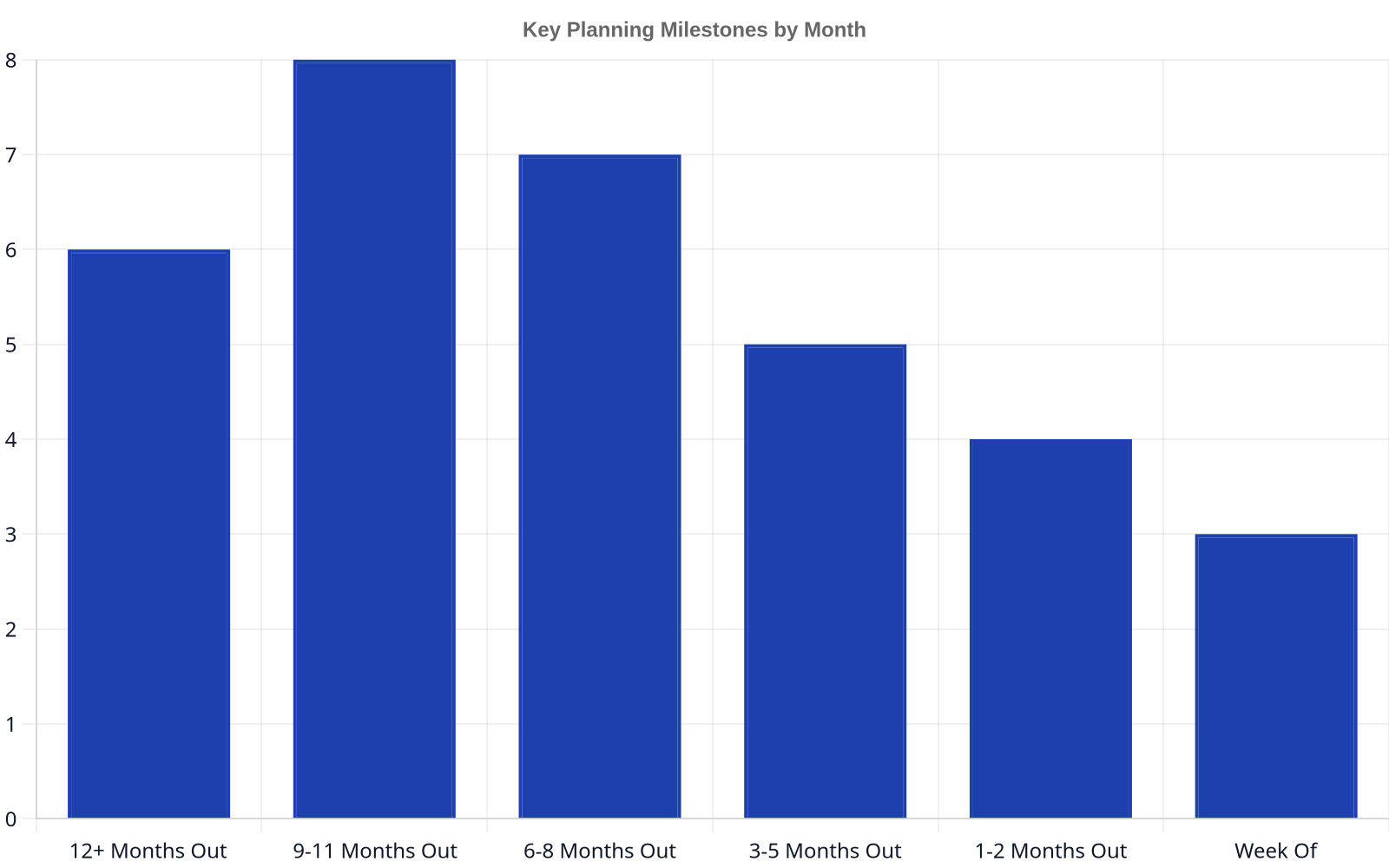
| Timeline | Key Tasks |
|---|---|
| 12+ Months Out | Set your budget. Define your vision. Estimate guest count. Tour venues. |
| 10-11 Months Out | Book your venue and lock in the date. Book photographer, videographer, and DJ/band. |
| 8-9 Months Out | Choose your wedding party. Shop for and order wedding dress and traditional attire. Launch wedding website. |
| 6-7 Months Out | Finalize guest list. Send save-the-dates. Book hotel blocks. Research marriage license requirements. |
| 4-5 Months Out | Attend menu tastings. Book caterer and baker. Finalize floral and decor plan. Book officiant. Purchase wedding rings. |
| 2-3 Months Out | Mail invitations. Have first dress fitting. Create a day-of timeline and share with vendors. |
| 1 Month Out | Track RSVPs. Apply for marriage license. Have final dress fitting. Write thank-you notes for early gifts. |
| 1-2 Weeks Out | Give final headcount to caterer/venue. Confirm all vendor details. Pack for your honeymoon. |
| The Day Before | Drop off decor items at the venue. Have your ceremony rehearsal. Get a good night’s sleep. |
| Post-Wedding | Send remaining thank-you notes. Arrange for dress cleaning/preservation. Enjoy being married! |
FAQ
What is the first step in creating a wedding planning list?
The very first step is to have an open conversation with your partner and families about the budget. Before you can dream about venues or colors, you must establish a realistic financial framework. This includes determining the total amount you can spend and who will be contributing. This conversation sets the foundation for every other decision.
How much should I budget for a wedding in Nigeria?
This varies dramatically based on guest count, location, and style, but it’s a significant investment. While some sources quote average U.S. The venue, catering, and decor are typically the largest expenses. Always get multiple quotes from vendors.
How far in advance should I book my wedding venue in Lagos?
For popular and well-regarded venues in Lagos, you should book at least 12 to 18 months in advance, especially if you are planning to get married during peak season (typically November through January). Our venue, which has a capacity of 500-1000, often sees weekend dates fill up over a year ahead of time.
Do I need a wedding planner for a Nigerian wedding?
While not mandatory, a wedding planner is highly recommended, particularly for large-scale Nigerian weddings. The logistics of coordinating with numerous vendors, managing family expectations, and handling a large guest list can be overwhelming. Many venues, like ours, offer event planning assistance to help manage the complexities and ensure your day runs smoothly.
What are some common mistakes to avoid when planning a Nigerian wedding?
One common mistake is underestimating the guest count. Your initial estimate is often lower than the final number. Another is not having a detailed, written contract with every vendor. Also, failing to create a comprehensive day-of timeline can lead to chaos. Lastly, many couples forget to plan for post-wedding tasks like sending thank-you notes and dress preservation.
What should I look for in a wedding photographer?
Beyond a beautiful portfolio, look for experience with Nigerian weddings. They will understand the flow of the day, the importance of family portraits, and how to capture the energy of the reception. Ask to see a full gallery from a recent wedding, not just highlights. Check their reviews and make sure your personalities mesh well, as you’ll be spending the entire day with them.
How do I handle Aso-Ebi coordination?
Designate one or two organized individuals to manage the Aso-Ebi process. They should be responsible for collecting money, distributing the fabric, and communicating deadlines. Use a spreadsheet to track payments and deliveries. Start the process at least 6-8 months before the wedding to avoid last-minute rushes with tailors.