A standard Nigerian wedding reception in 2026 costs between ₦2,000,000 for a modest 100-guest gathering and upwards of ₦15,000,000 for a 500-guest celebration. Knowing exactly where that money goes stops your spending from spiralling out of control before the first vendor is even booked. Setting a firm baseline helps you balance the heavy social pressure of hosting a memorable gathering against the reality of your actual household income.
How Much Does a Wedding Reception Venue Cost?
A single-day venue rental on Lagos Island costs between ₦3,000,000 and ₦10,000,000, while securing a venue on the Lagos Mainland for 300 to 500 guests will set you back between ₦1,500,000 and ₦2,500,000. That geographic gap represents a massive shift in how you allocate your total spending. Booking a space in a high-demand neighbourhood instantly consumes money that you might otherwise direct toward food, decoration, or external vendor logistics.
When you evaluate halls, look past the initial rental fee to see what the space actually provides. A cheaper bare-bones marquee demands immediate external hiring for tables, chairs, staging, cooling systems, and sound equipment. A more expensive booking that provides reliable standby power, adequate restrooms, and dedicated off-street parking often proves cheaper by the end of the night. You should measure the cost of the location against the physical infrastructure needed to make it functional. An affordable hall with failing air conditioning forces you to rent massive industrial fans, destroying the initial savings.
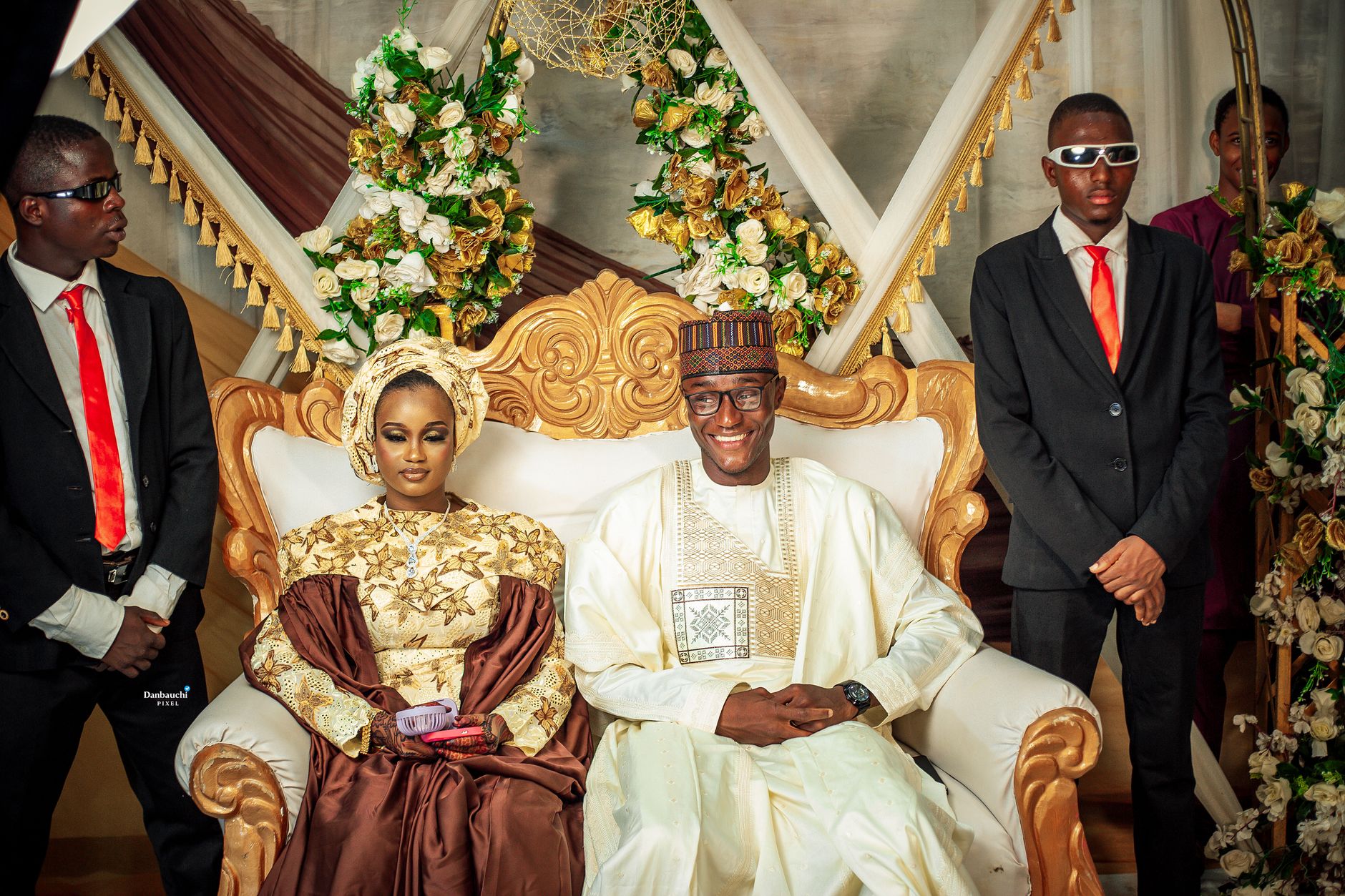
If you are comparing mainland options, Regal Castle on Ikotun-Idimu Road handles 500 to 1,000 guests for a grand wedding. The facility features beautiful ceremony and reception areas, alongside a bridal suite and on-site guest rooms. These built-in accommodations remove the need to rent separate hotel rooms for the bridal party to dress in, saving both time and transport costs on the morning of the event.
Your choice of location dictates the operational ceiling of the day. A venue that forces heavy traffic navigation on your suppliers will incur higher delivery fees from your decorators, caterers, and lighting crews. Choosing a space that already fits your expected head count prevents you from paying for wasted capacity or struggling to squeeze a large crowd into a poorly ventilated hall. Keeping the venue accessible and appropriately sized limits the financial strain on the rest of the planning sheet.
What Is the Per-Person Cost for Wedding Reception Catering?
Wedding catering and basic bar service in the US averages about $80 per person, with typical overall food and drink spending running $6,500 to $9,000, while a main meal per guest in Nigeria costs between ₦3,000 and ₦10,000. This stark contrast shows how deeply local market rates define your plate costs. In Nigeria, the basic quote usually covers only the primary buffet service of jollof rice, fried rice, and a few protein choices.
Your initial food quote rarely represents the final bill. You have to account for the extras that guests expect at a standard celebration. Including small chops, drinks, dessert, and cocktail stations with the main meal raises total per-head catering expenses to ₦7,000–₦14,000. Failing to calculate these secondary stations upfront leads to a severe budget shock weeks before the date.
You protect your budget by multiplying the full package rate by your exact guest count early in the planning process. Say you expect 400 guests and want to offer a complete experience with small chops and cocktails; you are looking at a minimum of ₦2,800,000 just to keep people fed and watered. Trying to add these elements on a piecemeal basis later in the month always costs more than negotiating a flat per-head rate on day one.
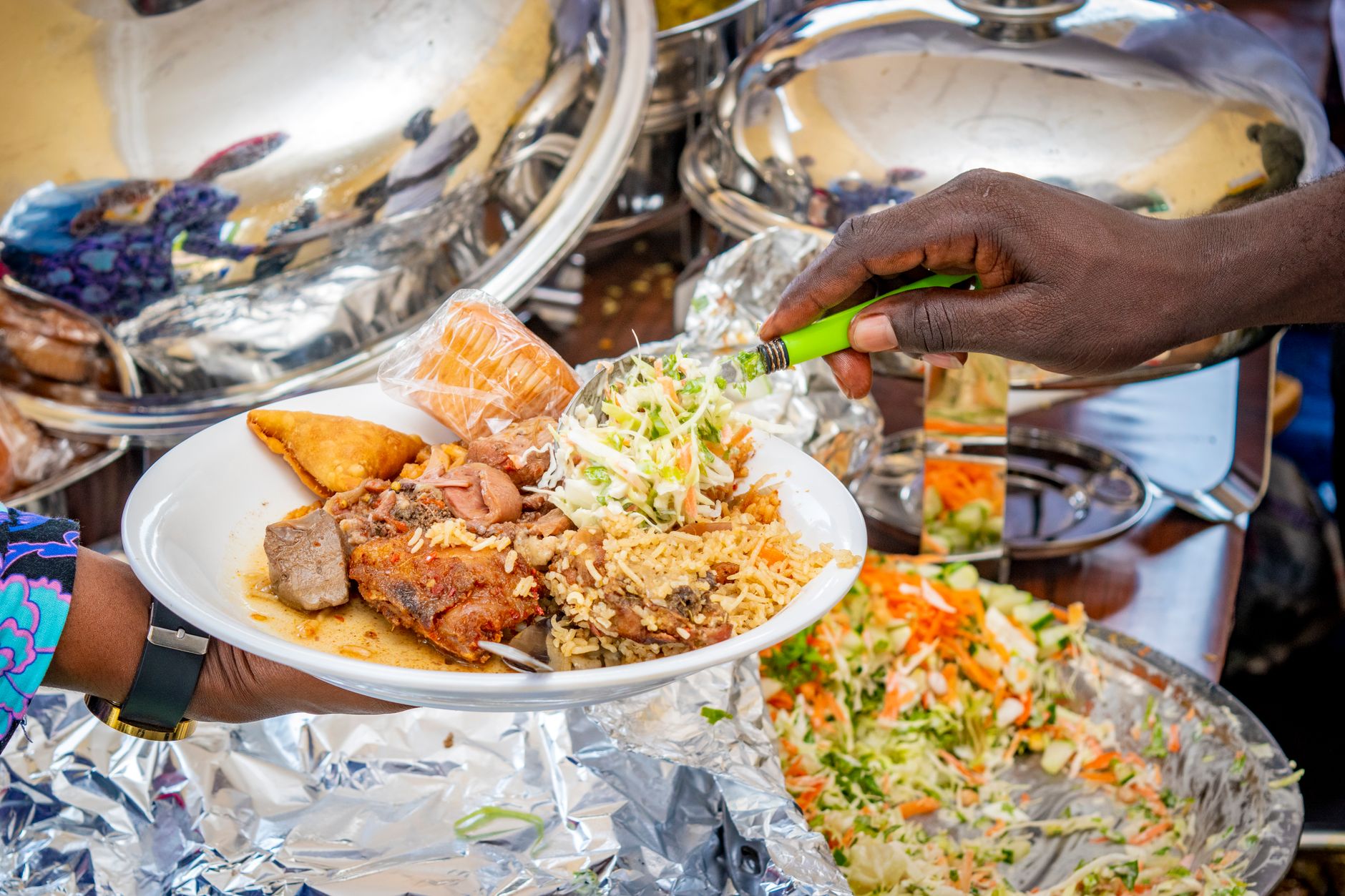
Food takes up the largest percentage of the day’s budget after the hall itself. A caterer charging ₦4,000 per head might seem like a bargain until you realise you must separately source servers, chafing fuels, ice chests, and a separate vendor for water and soft drinks.
A higher per-head rate from an established vendor often wraps these hidden logistics into one predictable figure. Always confirm whether the quoted price per plate includes the service staff and cooling equipment, because those line items add up rapidly when billed separately. Never assume that plates, cutlery, and napkins come free with the food unless the contract states it clearly.
How Do Service Styles and Menu Choices Affect Reception Food Costs?
A full plated multi-course dinner service costs between $90 and $150+ per guest. The constraint here is the sheer volume of labour needed to execute it. Serving individual plates to hundreds of seated guests demands a massive ratio of waiters to tables, precise timing, and a vast staging kitchen.
In a Nigerian setting, attempting to replicate this formal plated style for a crowd of 500 guests introduces a high risk of cold food and delayed service, heavily inflating your catering bill in the process. Waiters carrying single plates through a crowded hall simply cannot move fast enough to feed everyone at once.
You address this risk by choosing a buffet or family-style service instead. A buffet centralises the food dispensing, which drastically reduces the number of waitstaff needed on the floor. It also limits the portion sizes to what the servers spoon onto each plate, controlling your total food consumption. Family-style service places large bowls of food on each table for guests to share, offering the communal feel of a traditional gathering without the chaos of a long buffet line. Both options eliminate the need for an army of servers.
Your menu complexity drives the baseline price just as much as the service style. Offering four different types of swallow and five specialised soups means your caterer must prepare, transport, and keep hot nine distinct heavy dishes. Each extra menu item needs more raw ingredients, more chafing dishes, and more hands to serve it.
Keep the menu focused to control the budget. Stick to a strong baseline of jollof rice, fried rice, and one traditional swallow option with a versatile soup. Limiting the menu prevents the caterer from padding the bill to cover the logistical headache of a sprawling kitchen operation. You satisfy the crowd by delivering three excellent dishes hot and on time, rather than attempting ten average dishes that arrive late and stretch your finances to the breaking point.
How Much Does Wedding Reception Decoration Cost?
Setting a realistic starting budget to create high-impact decor focusing on focal areas ranges from ₦200,000 to ₦500,000. Choosing to concentrate your funds on a few key zones is a strategic decision. The trade-off is that you leave peripheral areas of the hall relatively bare, but you guarantee that the spaces appearing in every photograph look immaculate.
Spreading a ₦300,000 decor budget across an entire 800-capacity hall results in sparse table centrepieces and a weak stage presence. Instead, direct the bulk of that money towards the head table and the primary backdrop. Guests spend most of their time looking toward the couple, and your photographer frames the majority of the formal portraits against that main stage. A densely decorated front section commands attention and dictates the tone of the whole room.
Renting a simple wooden arch to frame backdrops or head tables costs between ₦20,000 and ₦35,000. You trade the high expense of building a custom floral wall from scratch for a structured, reusable foundation that you can drape with fabric or a cluster of fresh greenery. This approach delivers the visual scale needed for a large venue without demanding an unsustainable floral budget.
Rethink how you handle the guest tables. Intricate, towering floral arrangements on every single table consume a massive portion of the decoration fund. Swap them out for clustered candles and low-profile greenery. This trade-off not only saves hundreds of thousands of Naira, but it also stops tall vases from blocking the sightlines across the room.
Never attempt to decorate a massive venue by yourself on the morning of the event. The labour needed to transport, arrange, and take down heavy stage pieces at 1 AM demands a dedicated team. Outsource the heavy lifting to a vendor who owns the scaffolding and the transport, even if it means renting fewer items overall. A professional decorator brings industrial ladders, lighting rigs, and a team of workers who understand how to transform a bare hall in under three hours. Trying to manage that workload yourself leaves you exhausted before you even put on your wedding attire.
How Much Does an Entire Wedding Reception Cost by Guest Tier?
A simple wedding setup for 100 to 150 guests ranges between ₦2,000,000 and ₦5,000,000, whereas an upper-middle-class wedding accommodating 300 to 500 guests runs from ₦8,000,000 to ₦15,000,000. That leap in base cost changes how you build the initial guest list. Adding 200 people does not just mean buying more rice; it forces you into a higher bracket for the venue size, security, cooling capacities, and the sheer volume of printed materials. Every extra person acts as a multiplier across ten different budget lines.
A standard middle-class wedding hosting 200 to 300 guests typically costs between ₦3,000,000 and ₦8,000,000. This middle tier represents the most common breaking point for couples. You might start with a 150-guest budget, but as family members invite their own circles, the head count creeps past 250. That unplanned expansion breaks the original financial model because the per-head catering cost and the need for a larger hall suddenly compound.
You must lock in the guest tier before you sign any contracts. If you only have ₦4,500,000 to spend, you belong strictly to the 150-guest tier or a highly restricted 200-guest event. Choosing to push for 400 guests on that same budget means drastically cutting the quality of the food, removing all secondary drinks, and hiring a substandard hall.
The most effective way to protect your finances is strict gate control. An invite-only policy enforced by bouncers and access tags ensures your final numbers match the tier you paid for. If you pay a premium caterer to feed 300 people and 450 show up, the food runs out during the first hour of service.
Align your tier with your bank account, set a hard limit, and stick to the numbers you can actually afford to host properly. Do not let family pressure force you into a higher guest tier unless the family members making the demands are covering the exact difference in cost. The success of the reception rests on how well you treat the people who attend, not on how many bodies you can pack into the room.
Frequently Asked Questions
What Does Wedding Catering Cost for 200, 300, or 500 Guests?
Multiply the expected full-service per-head cost of ₦7,000 to ₦14,000 by your guest count to get a realistic baseline. For 200 guests, expect to pay between ₦1,400,000 and ₦2,800,000. For 300 guests, the catering bill scales from ₦2,100,000 to ₦4,200,000. Hosting 500 guests needs a food budget ranging from ₦3,500,000 to ₦7,000,000. These figures cover the main meal, drinks, and secondary stations like small chops.
Buffet vs. Plated Service: Which Costs More?
Plated service costs significantly more than a buffet. Serving individual plates requires a massive waitstaff and complex kitchen logistics, driving up the labour bill to unsustainable levels for a large Nigerian gathering. A buffet relies on a few central serving stations, cutting staff numbers and offering better control over portion sizes while keeping the food hot.
How Much do Caterers Charge For a Wedding in Nigeria?
A standard main meal alone costs between ₦3,000 and ₦10,000 per guest depending on the vendor. Adding small chops, dessert, cocktails, and soft drinks pushes the comprehensive package to between ₦7,000 and ₦14,000 per head. The final rate depends heavily on the menu complexity and whether you use a local cook or a premium catering studio.