The most effective way to create an unforgettable atmosphere for any event is through the strategic combination of lighting and florals. This isn’t about just filling a room; it’s about creating a mood, guiding your guests’ experience, and making sure every photo is stunning. By the end of this guide, you will know how to use these two elements to turn any venue into a bespoke environment that feels intentional and looks spectacular. The synergy between light and flowers is the core of high-impact event design, allowing you to highlight architectural features, create focal points, and set a specific tone, whether for a wedding or a corporate gala.
1. Start With a Clear Vision
Before you spend a single Naira on a light fixture or a bouquet, define the feeling you want to create. Is the event a romantic wedding, a high-energy product launch, or a formal corporate dinner? Your answer dictates every subsequent choice. A romantic wedding might call for soft, warm ambient light and lush, classic flowers like roses and hydrangeas. A corporate event, however, might demand crisp, clean lighting and structured, modern floral arrangements.
Create a mood board. Use tools like Pinterest to gather images of lighting setups and floral designs that match your desired atmosphere. This visual reference is invaluable for communicating your ideas to vendors and keeping the design consistent. Consider the time of day and the natural light available in your venue. Our expansive indoor halls and lush outdoor spaces at Regal Castle offer different canvases; an event in our garden at dusk will have a completely different lighting plan than one in our main hall during the day.
2. Choose Lighting to Shape the Space and Mood
Lighting is your most powerful tool for creating ambiance. It can make a large space feel intimate or a small space feel grand. The key is to layer different types of lighting to create depth and interest.
Here are the core techniques:
- Ambient Lighting: This is the base layer of light that fills the room. It sets the overall mood. Think chandeliers on dimmers, string lights, or candles. The goal is a warm, inviting glow, not a flat, overly-bright wash.
- Uplighting: Placing lights on the floor to shine up walls or columns adds drama and can incorporate your event’s color scheme. It’s a powerful technique for highlighting the architectural features of a venue, making the space feel taller and more impressive.
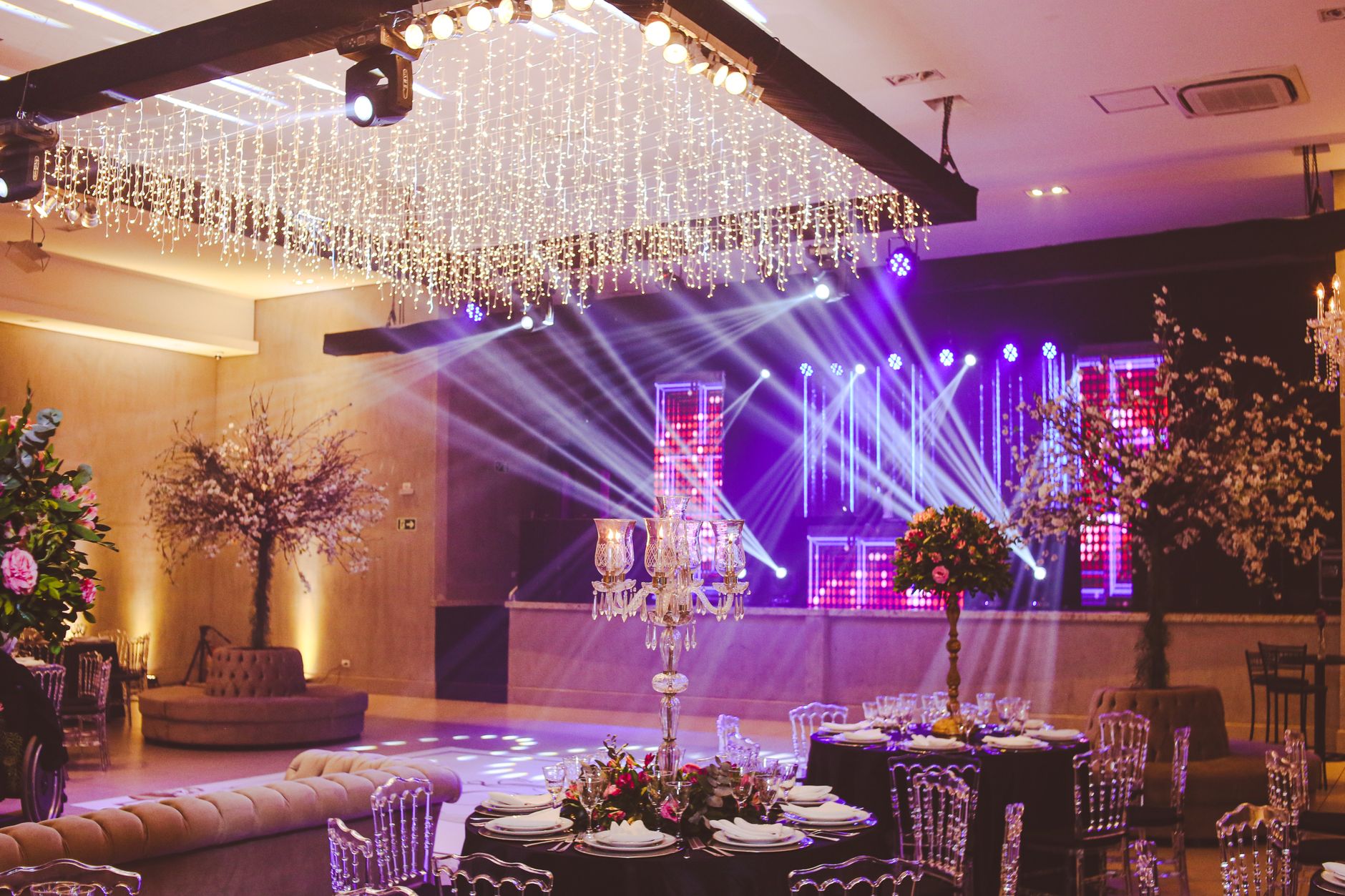
- Spotlighting & Pinspotting: Use focused beams of light to draw attention to key elements. A spotlight might illuminate the wedding cake, a corporate logo, or a speaker’s podium. Pinspotting is a more precise version, often used to make centerpieces on each table pop. This ensures your floral investments don’t disappear when the house lights go down.
The difference between a pretty event and a breathtaking one often comes down to pinspotting the centerpieces. When only the flowers on each table are illuminated in a darkened room, it creates an incredibly dramatic and luxurious effect.
3. Select Florals That Complement Your Theme
Your floral arrangements should work in harmony with your lighting and overall vision. Start by considering the scale of the venue. A large hall with high ceilings, like our main space which can hold up to 1000 guests, demands tall, statement centerpieces or even hanging floral installations to fill the vertical space. A smaller, more intimate gathering might be better suited to low, delicate arrangements that encourage conversation across the table.
Incorporate texture by mixing different types of flowers, foliage, and even non-floral elements like branches or berries. A leading floral design magazine often showcases arrangements that blend classic blooms with unexpected greenery for a more modern and dynamic look. Also, consider the season. Using seasonal flowers in Nigeria not only tends to be more budget-friendly but also ensures your arrangements are at their freshest and most beautiful. Don’t be afraid to use florals to define spaces, such as creating an aisle for a wedding ceremony or a backdrop for a stage.
4. Ensure Lighting and Florals Work Together
This is where the magic happens. Your lighting plan should enhance your floral arrangements, not wash them out. A common mistake is to drench colorful flowers in an equally colorful light, which can muddy the tones and make them look brown. For vibrant, multi-colored arrangements, use a clean, neutral white light to make the natural colors stand out.
Conversely, you can use colored lighting on neutral or white floral arrangements to great effect. White orchids or roses can be transformed by a soft pink or blue uplight, instantly tying them into your event’s color palette. Discuss this synergy with your vendors. An experienced event planner will coordinate between the lighting technician and the florist to ensure their plans are integrated. For example, the lighting designer needs to know the exact placement and height of the centerpieces to program the pin spots correctly.
5. Budget for Impact: DIY vs. Professional
Hiring professional lighting and floral designers is an investment, but it often pays for itself in impact and peace of mind. A professional understands the technical aspects of power distribution, rigging, and how different light sources affect color temperature. They can create a cohesive design that a DIY approach might miss.
However, if your budget is tight, focus your spending. Decide what is most important. Perhaps you invest in professional lighting to set the mood and then opt for simpler, more cost-effective floral arrangements. Or, if stunning flowers are your priority, allocate more funds there and use simpler lighting techniques like uplighting and candles.
A common budgeting mistake is underestimating the cost. Be upfront with your vendors about your budget. A good designer can suggest alternatives, such as using more greenery or repurposing ceremony flowers for the reception, to give you the desired look without exceeding your limit. In Lagos, lighting for a moderately-sized event can range from ₦150,000 to over ₦1,000,000 depending on complexity. High-end floral design can be just as significant. Get detailed quotes before signing any contracts.
Don’t try to save money by having a friend handle complex lighting. A professional knows how to safely rig equipment and manage the power load—mistakes in this area can be costly or even dangerous.
6. Consider Technology and Interactive Elements
Modern technology offers exciting new ways to integrate lighting and florals. Projection mapping allows you to project patterns, images, or even animations directly onto floral arrangements or venue walls, creating a dynamic and evolving backdrop. Imagine a floral wall where the flowers appear to bloom and change color throughout the evening.
Smart lighting systems, controllable from a tablet, allow for real-time adjustments. You can transition from a bright, welcoming light for guest arrival to a soft, romantic glow for dinner, and then to energetic, moving lights for dancing. Some systems even offer interactive elements where guests’ movements can influence the lighting patterns, creating a fun and engaging experience. While more complex, these technological touches are what create truly memorable corporate events and parties.
7. Conduct a Walk-Through and Final Check
Finally, schedule a walk-through of the venue with your key vendors (event planner, florist, and lighting technician) before the event. This is crucial for finalizing placement and logistics. Seeing the space together allows for better problem-solving. For example, the florist might identify a perfect spot for a large arrangement that the lighting designer can then highlight.
At Regal Castle, we always encourage a final site visit. Being on-site at our location on Ikotun-Idimu Road helps everyone visualize the flow of the event and confirm details like power source locations and rigging points. Our experienced team can offer event planning assistance during this phase, spotting potential issues before they become problems on the day of your celebration. This final coordination step ensures that the transformation of the space is seamless and lives up to your vision.
Frequently Asked Questions
How far in advance should I book lighting and floral vendors?
For weddings and large events in a busy city like Lagos, you should aim to book your lighting and floral designers 6-12 months in advance. High-demand professionals get booked quickly, especially during peak season. This also gives them ample time for design and sourcing.
What are some common mistakes to avoid?
The biggest mistake is a lack of a cohesive vision. Others include choosing flowers with a scent that is too overpowering for a dinner event, using incorrect lighting color temperatures that wash out decor, and underestimating the amount of power needed for a complex lighting setup.
Can I use candles instead of professional lighting?
Candles create a beautiful, romantic ambiance but are rarely sufficient as the sole light source. They work best as a decorative layer combined with professional ambient and accent lighting. Always check the venue’s policy on open flames; many venues, for safety reasons, require candles to be enclosed in glass or prohibit them entirely.
How can I make my lighting and florals more sustainable?
Opt for LED lighting, which consumes significantly less energy than traditional bulbs. For florals, choose seasonal and locally grown flowers to reduce transportation emissions. You can also work with a florist who practices sustainable techniques, like avoiding floral foam (which is not biodegradable). A guide to sustainable floristry offers many useful tips.
Should my lighting match my wedding colors?
Not necessarily. While you can use lighting to reinforce your color palette, it’s often more effective to use a neutral, warm white light to enhance the true colors of your flowers and decor. Use colored light selectively for impact, such as on walls or a dance floor, rather than on everything.