The Ultimate Guide to Seating Arrangement for Nigerian Families
At a Nigerian wedding, the seating chart is a social map of honour, family standing, and community relationships. Getting the seating arrangement for Nigerian families right is not just about logistics; it’s a critical expression of respect, tradition, and social hierarchy. Who sits at the high table, which elders get seats in the first ring of tables, and how aso-ebi groups are organized communicates volumes. Done correctly, the event flows with dignity. Done poorly, it can cause offence that is remembered for years. This is about honoring the complex, beautiful web of family and community.
This guide breaks down the essential seating arrangements for Nigerian families, based on years of experience managing events for hundreds of guests at our Lagos venue. We’ve seen firsthand how thoughtful planning prevents chaos and ensures every important guest feels recognized. These aren’t just theories; they are practical, field-tested strategies for orchestrating a flawless event, whether it’s a wedding, a milestone birthday, or one of the many family reunions & religious ceremonies we host.
1. The High Table: The Apex of Honor
The high table is the focal point of any Nigerian reception. Its composition is the most public statement of respect you will make all day. It is reserved for the most important individuals: the couple, their parents, and sometimes grandparents or a highly respected family patriarch/matriarch. In some traditions, key religious leaders or a chairman of the occasion may also be seated here. The key is exclusivity and visibility. Everyone at this table is on display, signifying their central role in the couple’s lives and the day’s proceedings.
- Best for: Publicly honouring the core family and key figures.
- Watch out for: Overcrowding. Resist pressure to add distant relatives or friends to this table; its power lies in its exclusivity. This can cause friction, so the rules must be set early and communicated clearly by the wedding planner or a designated family elder.
2. The Golden Circle: Inner-Ring VIPs
Immediately surrounding the high table are the “golden circle” tables. This is prime real estate for the next tier of distinguished guests. This is where you place titled chiefs, community leaders, very close uncles and aunties, and anyone else whose status demands proximity to the main action. The proximity to the high table directly reflects their importance. Think of it as concentric circles of influence. A study on Nigerian family systems highlights the deep-rooted importance of such hierarchies in decision-making and social structure, which extends directly to event seating.
These tables often receive a slightly higher grade of service or decor, further marking them as special. For a wedding with 500 guests, these first- and second-row tables might account for 50-80 of your most crucial attendees. Getting this section right prevents the most common and public forms of disrespect.
- Best for: Seating elders, titled guests, and close family who aren’t at the high table.
- Watch out for: Misjudging seniority. Accidentally placing a more senior chief at a table farther back than a junior one is a significant slight. This requires careful consultation with family elders who understand the intricate social dynamics.
3. Aso-Ebi Sections: Seating by Fabric
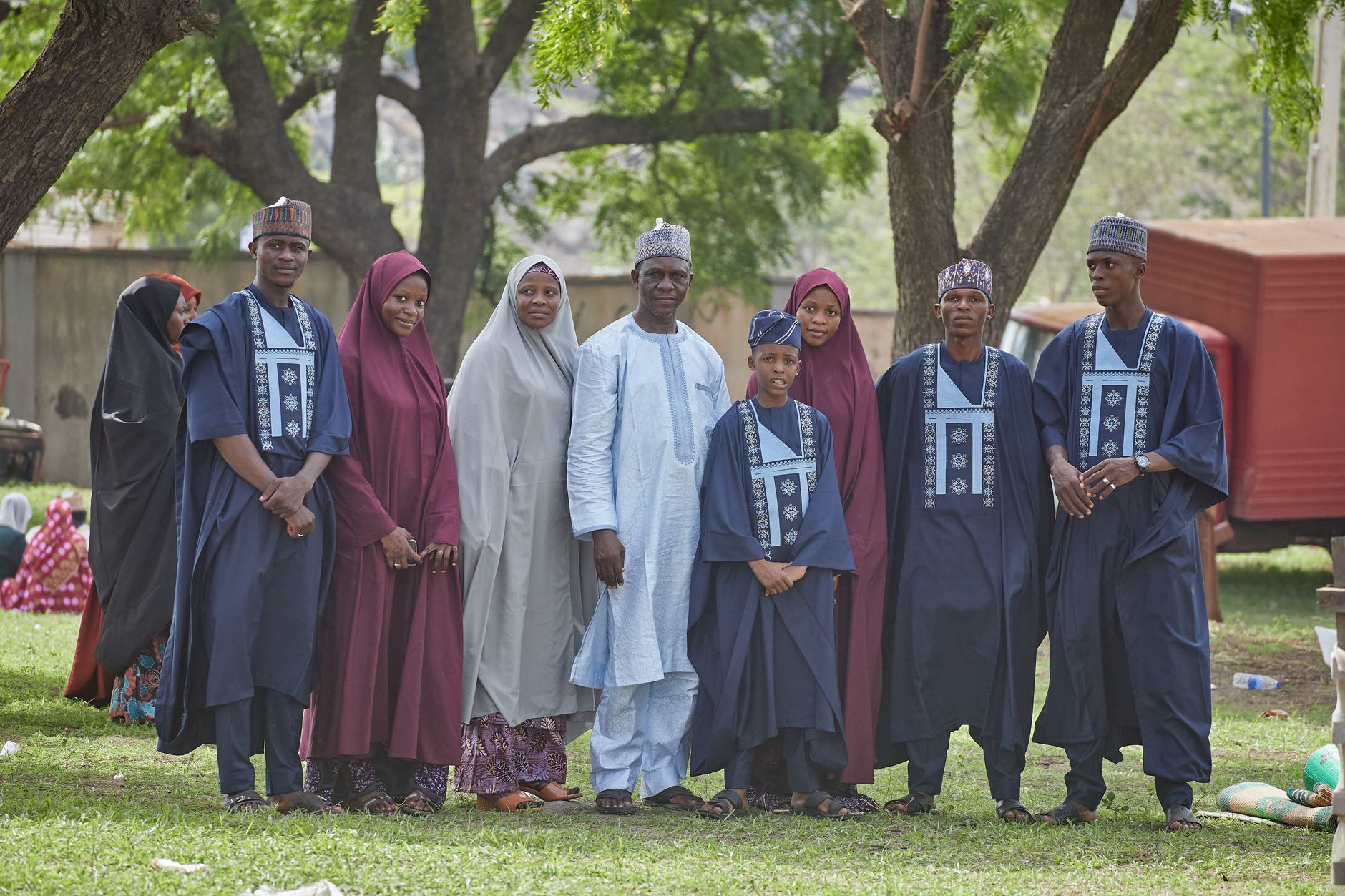
Aso-Ebi, the tradition of wearing a shared family fabric, is a vibrant and essential part of Nigerian celebrations. It provides a powerful visual tool for organizing your seating plan. Grouping guests by their aso-ebi is not just practical; it reinforces bonds and creates stunning visual blocks in the event hall. You can have a section for the bride’s family’s fabric, another for the groom’s, and dedicated areas for the bride’s friends, the groom’s friends, and any other groups who have their own distinct aso-ebi.
At a Nigerian wedding, the seating chart is not just logistics, it is a social map of honor, family standing, and community relationships. Who sits at the high table, which chief gets the first ring of tables, and how the aso-ebi sections are organized all communicate something to every person in the room. Done well, it runs beautifully. Done carelessly, it is remembered for years.
The seatbee Team (seatbee.app)
This method simplifies finding one’s place in a large hall and encourages mingling among guests who already share a connection. It also helps photographers capture beautiful, cohesive group shots. In a large venue like ours, capable of hosting up to 1000 people, designated aso-ebi zones are crucial for managing flow and creating a sense of community within a large crowd.
- Best for: Large weddings with multiple distinct social or family groups.
- Watch out for: Uneven group sizes. One aso-ebi group might have 100 people while another has 20. Mix and match smaller groups into shared zones to avoid half-empty sections of the hall. Flexibility is key.
4. Ethnic Group-Specific Arrangements
Nigeria’s rich cultural diversity means seating protocols can vary significantly between ethnic groups. What works for a Yoruba wedding might not be appropriate for an Igbo, Hausa, or Ijaw ceremony. For example, in many Igbo weddings, the concept of the umu-ada (paternal daughters) and umunna (paternal kinsmen) plays a huge role, and these groups often have specific, designated seating areas that acknowledge their traditional responsibilities. Understanding these nuances is critical for a multicultural couple. For a deeper look at one specific tradition, you can explore the details of a yoruba wedding tradition.
When planning for inter-ethnic weddings, open communication between both families is the only way forward. A professional wedding planner, particularly one with multicultural experience like Teantona Events, can be invaluable in navigating these sensitive discussions. They act as a neutral third party to mediate and blend traditions respectfully.
- Best for: Inter-ethnic weddings or events with strong traditional elements.
- Watch out for: Assuming one size fits all. Always consult elders from each family to understand their specific expectations. Ignoring one side’s customs is a recipe for conflict.
5. Unassigned Seating: The High-Risk Option
While popular in some Western cultures, unassigned seating is a gamble at most Nigerian events. The potential for chaos and perceived disrespect is extremely high. Without guidance, guests may create their own hierarchy, leading to younger guests taking prime seats while elders are left searching. This can result in public disagreements and a general sense of disorder, as highlighted by event experts who warn against the problem of unassigned seating.
Unassigned seating can work, but only in very specific, controlled circumstances. A small, informal event with a young guest list, perhaps a casual party for people mostly in the 18-39 years of age bracket, might handle it. But for a traditional wedding or a formal family celebration, the risks far outweigh the benefits. If you choose this path, at least reserve the first few rows of tables for family and VIPs to prevent the most obvious slights.
The first thing every Nigerian wedding planning guide should say out loud: you are planning two weddings.
freeweddingseating.com (freeweddingseating.com)
This quote refers to the separate traditional and white weddings, each requiring its own seating plan. A comprehensive guide to Nigerian wedding planning can help manage these dual requirements.
- Best for: Very small, informal gatherings with a homogenous and young guest list.
- Watch out for: Offending elders and creating chaos. This approach goes against the grain of Nigerian cultural expectations around respect and hierarchy.
6. Digital Seating Tools
Managing a seating chart for 400 or 500 guests on paper is a nightmare. Last-minute changes are inevitable, and erasing and redrawing names is inefficient and messy. Modern digital seating chart tools are essential for complex Nigerian events. Apps like SeatBee or platforms like AllSeated allow you to create a to-scale floor plan of your venue, drag and drop guests to their tables, and track RSVPs. One guide to Nigerian wedding seating points out how these tools can help manage complex arrangements.
These tools make it easy to share the plan with family members for input and accommodate last-minute changes with a few clicks. You can easily ensure you don’t place feuding family members at the same table or that a key auntie has a clear view of the high table. They transform a stressful task into a manageable one.
- Best for: Any event with more than 100 guests.
- Watch out for: Over-reliance without human oversight. The software can place people, but it doesn’t understand the subtle social dynamics. The final review must always be done by someone who knows the family.
Summary of Seating Arrangements
| Arrangement | Key Challenge |
|---|---|
| The High Table | Resisting pressure to add more people |
| The Golden Circle | Accurately mapping social hierarchy |
| Aso-Ebi Sections | Balancing uneven group sizes |
| Ethnic Group-Specific | Mediating between different customs |
| Unassigned Seating | High risk of offending elders and causing chaos |
| Digital Seating Tools | Requires human oversight for social nuances |
Further reading
FAQ
What is the biggest mistake in seating arrangement for Nigerian families?
The biggest mistake is failing to honour the hierarchy. Placing a junior family member or a distant guest in a more prominent seat than a respected elder or a titled chief is a major sign of disrespect. This often happens not out of malice, but from a lack of consultation with older family members who understand the intricate social map.
How do you handle last-minute guests who show up without an RSVP?
This is very common. Always plan for it. Have one or two “buffer” tables set up at the back of the hall. This ensures unexpected guests have a place to sit without disrupting the carefully planned arrangement. Your event coordinator or ushers should be briefed on how to discreetly guide these guests to the designated tables.
Should the bride’s and groom’s families sit separately?
Traditionally, yes, there is often a clear division with the bride’s family and guests on one side of the hall and the groom’s on the other. This creates a beautiful visual during dancing and other interactive parts of the ceremony. However, for the tables closest to the high table, it’s a good gesture to mix key members from both families to foster unity.
What is the role of a wedding planner in seating?
A planner is a project manager and a neutral mediator. They are responsible for chasing RSVPs, managing the digital seating chart software, and liaising with the venue. Crucially, they can facilitate difficult conversations between the two families about who sits where, using their experience to suggest solutions that respect all sides. A planner who understands cultural weddings, as noted by sources like Teantona Events, is invaluable.
Does seating arrangement differ for the traditional ceremony vs. the reception?
Yes, significantly. The traditional engagement ceremony (like the Alaga Iduro/Ijoko in Yoruba culture) often has a more prescribed and theatre-like seating format dictated by the masters of ceremony. The reception offers more flexibility but also involves a much larger number of guests. You are essentially planning two different events with two different seating plans.
How do I handle family disputes when planning seating?
Use a digital tool to visualise the room and create distance between guests who do not get along. Place them on opposite sides of the hall if necessary. Rely on a neutral party, like your wedding planner or a trusted family friend, to have the difficult conversations. The goal is a peaceful day, and that sometimes means strategically engineering distance.
Planning the seating for a Nigerian event is a delicate dance of tradition, respect, and logistics. It sets the tone for the entire celebration. By understanding the core principles of hierarchy and leveraging modern tools, you can create an arrangement that honours every guest and allows the day to unfold beautifully. If you’re planning an event in Lagos State, the right venue is the foundation of your plan, so contact us to see how our space can work for you.