Is a naming ceremony really that different from planning a birthday party? Many families in Lagos assume they can just wing it, only to find themselves scrambling a week before the event. A proper naming ceremony planning checklist is your roadmap to a stress-free day that focuses on your child, not on last-minute logistics. It ensures you cover everything from booking the right venue and finalising the guest list to personalizing the ceremony and choosing guideparents, all while managing your budget in Naira. For larger celebrations, learn how to plan your wedding in Lagos with a comprehensive 12-month guide.
This checklist is for Nigerian parents, godparents, and family members looking to create a meaningful, well-organized naming ceremony without the chaos. We’ll walk through the entire process, from three months out to the day itself.
The Early Stages: 2–3 Months Out
The foundation for a successful naming ceremony is laid months in advance. Getting these big-ticket items sorted early prevents major headaches later.
- Define the Vision & What it is: First, decide what kind of event you want. Is it a small, intimate gathering or a large celebration? A naming ceremony is a non-religious event to formally introduce your child to family and friends. Unlike a christening, it focuses on the child’s place within the family and community, as explained by celebrants from the Humanists UK network. Set a clear intention for the tone and style.
- Set a Budget: Determine a realistic budget in Naira. This figure will guide all your subsequent decisions, from the venue to the catering.
- Draft a Guest List: Create an initial list of everyone you want to invite. This will help you estimate the number of guests, which is crucial for venue selection. Our venue, for instance, has a capacity of 500-1000 guests, which suits larger family celebrations common in Lagos.
- Choose a Date & Time: Select a date that works for your immediate family and any key participants. Weekends are popular, but consider a weekday for better venue availability. Most ceremonies happen within the first year of a child’s life.
- Book the Venue: With your guest count and date, secure your venue. Look for a location like ours on Ikotun-Idimu Road in Lagos that can accommodate your numbers and has the right ambiance. A venue with an in-house team can simplify things immensely; our event planning assistance is designed to help with these logistics from day one.
- Select “Guideparents” or “Mentors”: This is a key part of a secular ceremony. These are the special adults you will ask to play a significant, supportive role in your child’s life. Ask them personally and well in advance.
Budgeting for Your Naming Ceremony
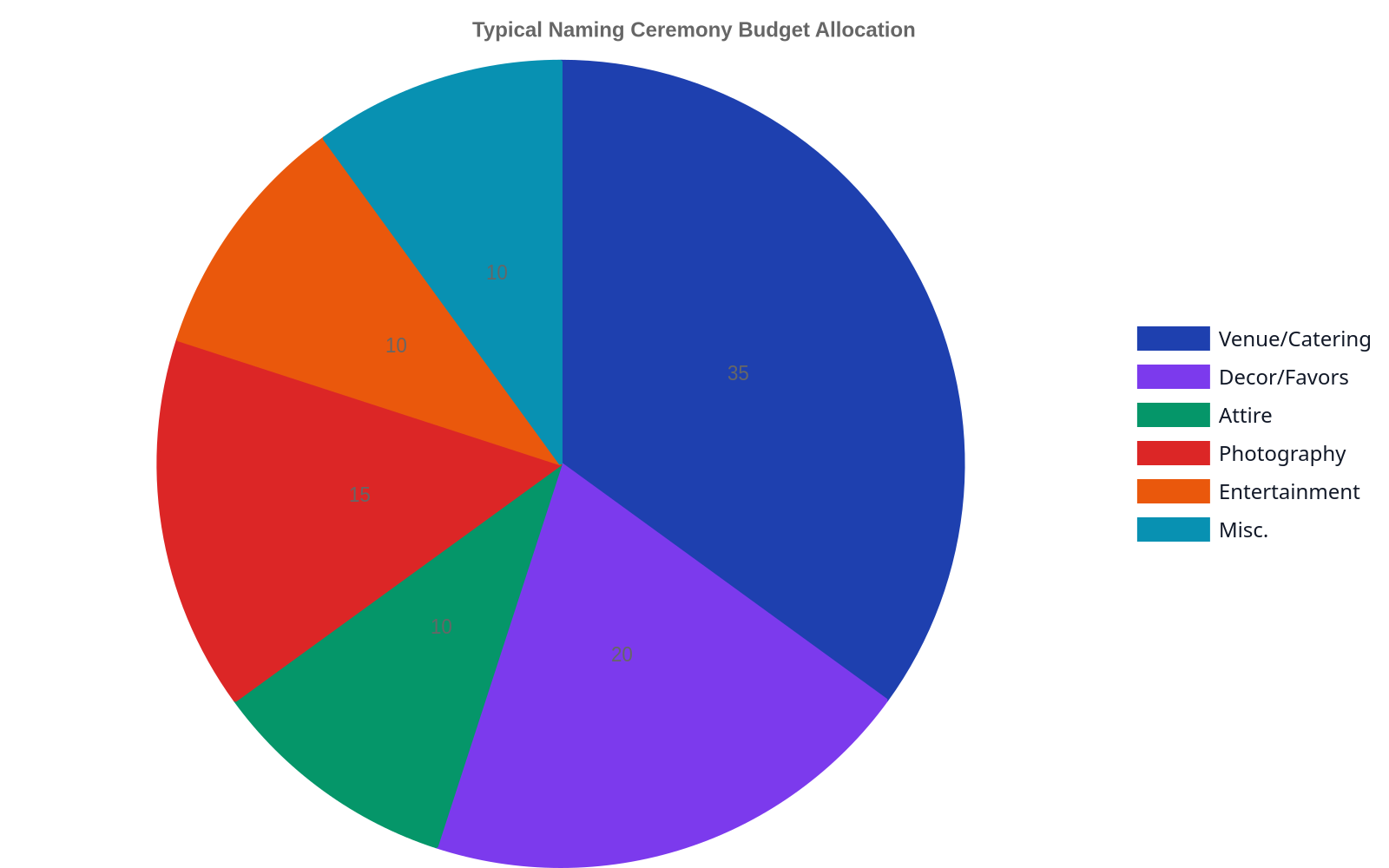
Managing your funds is critical. A clear budget prevents overspending and financial stress. While costs can range from ₦200,000 for a small home event to several million Naira for a large hall celebration, the principles are the same.
- Venue & Catering (50%): This is typically the largest expense.
- Decorations & Rentals (15%): Includes flowers, balloons, tables, and chairs if not provided by the venue.
- Entertainment & MC (10%): A DJ, live music, or a Master of Ceremonies.
- Outfits & Attire (10%): For the baby and immediate family.
- Photography & Videography (10%): Capturing the day is non-negotiable for most.
- Miscellaneous (5%): Cakes, invitations, and unexpected costs.
The Details Phase: 1 Month Out
With the major pieces in place, it’s time to focus on the elements that make the ceremony personal and run smoothly.
- Send Invitations: Mail or digitally send your invitations. Include the date, time, location, and a brief note on the purpose of the celebration.
- Plan the Ceremony Structure: Decide on the flow of events. This includes the welcome, the introduction of the child, readings or poems, the naming itself, and the promises made by parents and guideparents.
- Choose Readings and Music: Select poems, readings, or songs that are meaningful to your family. You can find excellent examples of secular naming ceremony poems that focus on love, family, and community.
- Hire Vendors: Finalize bookings for your photographer, caterer (if separate from the venue), decorator, and any entertainment. Confirm arrival times and their requirements.
- Personalize the Ceremony: Think about unique rituals. You could plant a tree, create a time capsule with letters for the child, or have guests write wishes on a scroll. Personal touches are what make the event memorable for guests.
Don’t just plan an event; design an experience. The most memorable ceremonies are those that tell a story about the family, not just announce a name.
The Final Week & Day Of Checklist
This is the final stretch. It’s all about confirmation and coordination. A good checklist prevents last-minute panic.
One Week Before:
- Confirm final guest numbers with your venue and caterer.
- Share a timeline with all vendors (photographer, MC, etc.).
- Confirm roles with guideparents and anyone doing a reading.
- Pick up outfits and any special items (e.g., commemorative certificate).
- Make a list of photos you definitely want the photographer to capture.
The Day Before:
- Pack a “baby bag” with extra clothes, diapers, and essentials.
- Drop off any decor, place cards, or favours at the venue.
- Get a good night’s sleep!
Day of the Ceremony:
- Arrive at the venue early.
- Do a final walkthrough with the venue manager or your event planner.
- Check sound equipment for music and speeches.
- Have payments or envelopes ready for vendors.
- Most importantly, relax and enjoy this special moment with your child.
For guests travelling from afar, having lodging options nearby is a huge relief. Our venue offers elegant guest suites, allowing key family members to stay on-site and unwind without the stress of Lagos traffic.
Copy & Paste Naming Ceremony Checklist
FAQ
Who can officiate a naming ceremony in Nigeria?
Since a naming ceremony is not a legal or religious rite, anyone can officiate. This could be a parent, a respected family elder, or a professional celebrant. The key is choosing someone who is a confident public speaker and understands the significance of the event for your family.
What is the legal status of a naming ceremony?
A naming ceremony has no legal standing. It is a celebratory event, not a legal process. Registering your child’s birth with the National Population Commission is the separate, official act of giving them their legal name.
What are some ideas for involving siblings?
Older siblings can be given important roles to make them feel included. They could read a short poem, help present a symbolic gift, or join the parents in making promises to the new baby. This helps foster a sense of family unity.
Is it okay to ask for gifts for a naming ceremony?
It is generally acceptable. While many guests will bring gifts regardless, you can create a small, informal registry or suggest contributions to the child’s savings account if you prefer. However, the focus should remain on the celebration of the child, not on presents.