The New Reality of Connection: A 2026 Guide to Virtual and Hybrid Event Solutions
Throwing an event is like building a house. For decades, the blueprint was simple: four walls, a roof, and everyone inside. The digital shift initially gave us a flimsy tent—a virtual meeting—functional, but lacking the permanence and presence of a real structure. Many still see it that way. They are wrong. The future isn’t a choice between a physical building and a virtual tent; it’s designing a single, interconnected estate.
True understanding virtual events and hybrid event solutions event solutions are a strategic integration of technology and physical space designed to massively broaden audience reach and engagement. It is about creating a single, unified experience for both in-person and remote attendees by using a deliberate stack of tools for live streaming, interaction, and deep analytics. This modern approach maximizes accessibility and return on investment by making geography irrelevant for a significant portion of your audience, turning a local event into a global touchpoint.
The Rise of Virtual and Hybrid Events: A Market Overview
The pivot to digital wasn’t a temporary fix; it was an acceleration into a new standard of audience accessibility. The global virtual events market has seen explosive growth, with a projected compound annual growth rate (CAGR) of over 21% from 2022 into the next decade, according to analysis by Grand View Research. This isn’t just about webinars. This is a fundamental change in how we think about corporate, social, and educational gatherings. Yet, the rapid evolution of technology has created its own challenges. An often-cited industry poll suggests event planners struggle technical, making expert guidance more critical than ever.
Types of Virtual and Hybrid Events

Understanding the different models is key to choosing the right strategy. The terms are not always interchangeable.
Fully Virtual Events
This model is 100% online. All attendees, speakers, and sponsors interact through a digital platform. Think of them as the next generation of webinars, elevated with multiple tracks, networking lounges, and interactive exhibitor booths.
- Use Cases: Global team meetings, product launch webcasts, online educational courses, digital-native community conferences.
The Internal Hybrid Model
This involves one primary location where a group is gathered, broadcasting to other individuals or small groups in various remote locations. It’s a common format for large-scale corporate town halls where regional offices tune into the main headquarters’ presentation.
- Use Cases: Company-wide announcements, sales kick-offs, investor relations briefings.
The External Hybrid Model
This is the most complex and, arguably, the most powerful model. It features a core in-person event at a physical venue, with a dedicated, parallel experience for a remote virtual audience. The goal is to meld the two audiences, allowing for cross-environment interaction, Q&A, and networking. This is where a venue’s capabilities are truly tested.
- Use Cases: Major industry trade shows, large-scale association conferences, and high-profile Corporate Events.
Key Features and Technologies in Virtual and Hybrid Event Platforms
Executing a successful digital event component relies on a robust technology stack. It’s not just about a Zoom link. A true solution integrates multiple functions.
The platform isn’t the event, it’s the plumbing. The real experience is built by the content and the interaction you design around the technology, not by the features themselves.
Custom Virtual Event Platforms
Off-the-shelf solutions can be limiting. Professional-grade events often require a custom-branded platform that acts as the central hub. Market leaders like cvent hybrid event platform have built entire ecosystems around this, with their platform powering events for over 100,000 active users. These platforms manage registration, agendas, attendee profiles, and content delivery in one place.
Engaging Interactivity Tools
Passive viewing is the enemy of engagement. The core of virtual and hybrid event solutions is interactivity.
- Live Polls and Q&A: Simple, yet powerful for gauging audience sentiment and keeping people focused.
- Breakout Rooms: Facilitate smaller, more focused discussions, mimicking the intimacy of a side conversation at a physical event.
- Gamification: Leaderboards, badges, and point systems can drive attendees to explore more content and interact with sponsors.
- Networking Features: AI-powered matchmaking can connect virtual attendees with each other or with in-person participants based on shared interests.
Live Streaming and Production Quality
A shaky camera and poor audio will instantly devalue your event. High-quality live streaming production is non-negotiable. This involves multiple cameras, professional-grade audio equipment, and a dedicated technical team to manage the broadcast. For hybrid events, this team must work in concert with the on-site AV crew.
Virtual vs. Hybrid vs. In-Person
| Feature | Fully Virtual Event | Hybrid Event | In-Person Only Event |
|---|---|---|---|
| Audience Reach | Global, unlimited by venue capacity. | Global + Physical. The largest potential reach. | Local, limited by venue capacity and travel. |
| Cost (Naira) | ₦500,000 – ₦5,000,000+. Lower, no venue/catering costs. | ₦3,000,000 – ₦20,000,000+. Highest cost, funds two experiences. | ₦1,500,000 – ₦15,000,000+. Major costs are venue, F&B. |
| Engagement | Harder to maintain focus; relies heavily on platform tools. | Complex to unify; risk of two separate, unequal experiences. | Highest potential for deep, serendipitous networking. |
| Data & Analytics | Excellent. Every click, view, and interaction is trackable. | Excellent. Combines digital tracking with on-site data. | Poor. Limited to registration data and manual surveys. |
| Logistical Complexity | Medium. Focus is on platform and content management. | Highest. Requires managing two simultaneous event flows. | High. Focus is on physical space, travel, and on-site services. |
Planning and Execution of Hybrid Events

Successfully merging a physical and digital event is a masterclass in logistics. It requires a different planning approach, not just adding a “virtual” ticket option to a live event.
Here’s a simplified workflow:
- Define a Unified Mission: Start by asking what success looks like for both audiences. What should a virtual attendee from Abuja experience that complements the experience of someone physically in Lagos? Your goals dictate your strategy.
- Choose Integrated Partners: You need a venue that understands production and partners who are fluent in virtual platforms. Our expansive outdoor & indoor event spaces, for example, can be set up as a broadcast studio while still accommodating a live audience of 500-1000, but this requires a plan.
- Appoint a Virtual Emcee: The remote audience needs a dedicated host—someone to guide their experience, moderate online Q&A, and bridge the gap between the virtual and physical worlds. This role is as important as the on-stage host.
- Design Content for Two Screens: Speakers must be coached to address the camera as well as the room. Presentations should use larger fonts and clearer visuals that work on a laptop screen, not just a massive conference display.
- Run a Full Technical Rehearsal: This is non-negotiable. Test every handover, every platform feature, and every piece of AV equipment from the perspective of both the on-site and remote user.
Measuring Success: Benchmarking ROI for Virtual and Hybrid Events
One of the most significant advantages of incorporating a digital component is the wealth of data you can collect. While in-person events struggle to quantify engagement beyond attendance, hybrid platforms track everything.
Don’t confuse attendance metrics with engagement. A high view count is a vanity metric if the audience wasn’t paying attention. The real win is trackable interaction.
Key metrics to measure include:
- Digital Attendee Engagement: Which sessions were most popular? How many questions were asked? Who were the most active participants?
- Sponsor Interaction: Clicks on sponsor banners, downloads of sponsored content, and scheduled meetings are all measurable and provide clear ROI for partners.
- Content Performance: Analytics reveal which speakers or topics resonated most, providing invaluable feedback for future event programming.
- Cost-Per-Interaction: By combining financial data with engagement metrics, you can calculate a true ROI. It’s no surprise that positive roi hybrid events from hybrid events within seven months.
The Lagos Advantage: A Hub for Hybrid Excellence
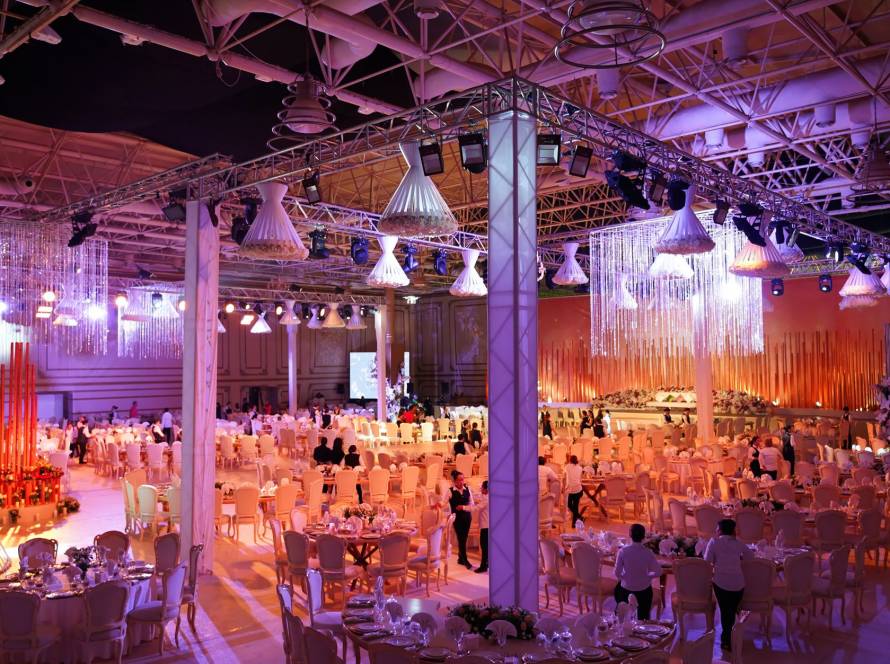
For a hybrid event to succeed, the physical hub must be more than just a room. It must be a production-ready environment with the infrastructure and support to broadcast excellence. Venues in a vibrant hub like Lagos are uniquely positioned to serve as the heart of a world-class hybrid experience. The energy of a live audience in a premium location provides compelling content for the virtual audience.
At Regal Castle, we go beyond simply providing a space. Our event planning assistance is crucial for organizations looking to navigate the dual demands of a hybrid model. We understand how to configure our halls not just for guests, but for cameras, lighting, and broadcast technicians. This integrated approach is the key to creating a single, cohesive event, not two separate ones.
Common Challenges and How to Overcome Them
Venturing into hybrid events isn’t without potential pitfalls. Anticipating them is the first step to avoiding them.
Challenge: The “Two-Tiered” Experience
The biggest risk is making remote attendees feel like second-class citizens. They watch a party they weren’t invited to.
- Solution: Create unique digital-only content, have a dedicated virtual host, and facilitate interactions between the two audiences. Feature questions from the online audience on the main stage.
Challenge: Technical Failures
A lost stream, bad audio, or platform crash can derail the entire event for your remote audience.
- Solution: Invest in redundancy. Have backup internet connections, backup hardware, and a dedicated technical support team that can triage issues in real-time. Do not try to save money on the tech support team.
Challenge: Budget and Resource Strain
Executing two events in one can seem daunting and expensive. It requires more planning, more staff, and more technology.
- Solution: Reframe the budget. Instead of seeing it as a cost center, view it through the lens of expanded reach and data. The value of new leads from a previously untapped global market can far outweigh the additional production costs. Start with smaller, more manageable hybrid components before scaling up.
FAQ
What’s the biggest difference between a virtual and a hybrid event?
A virtual event is entirely online; no physical component exists. A hybrid event has both an in-person audience at a physical venue and a virtual audience attending remotely. The key challenge and goal of a hybrid event is to bridge the experience between those two groups.
How much more does a hybrid event cost than a purely in-person one?
Budgeting for a hybrid event can increase your total event cost by 25% to 75% compared to a purely physical event. A simple, single-track live stream might add ₦1,000,000 – ₦2,000,000 to your budget, while a fully interactive, multi-session experience on a custom platform can add ₦5,000,000 or more. The additional cost covers the platform, added technical crew, and potentially more robust internet infrastructure.
Can I use my own virtual platform at a venue like Regal Castle?
Yes, absolutely. Our vendor-friendly policies mean you can bring in your preferred technology partners. However, we highly recommend an early-stage consultation where our planning team can liaise with your tech provider to ensure a smooth integration with our on-site infrastructure, from internet bandwidth to AV patch points.
How do you keep virtual audiences engaged?
Engagement comes from participation, not passive viewing. Use interactive tools like polls, Q&A, and moderated chat. A dedicated virtual emcee is crucial to make the online audience feel seen and heard. Also, creating exclusive content or networking opportunities just for the virtual attendees can add significant value.
What kind of technical support is needed for a hybrid event?
You need a team that covers both the live and virtual components. This typically includes an on-site AV team (for cameras, mics, and screens) and a virtual event production team (for managing the streaming platform, encoding video, and monitoring the online experience). For a major event, a dedicated technical director should oversee both teams.
Hybrid and virtual events aren’t just a trend; they are a permanent and powerful fixture of the event landscape. They offer an unparalleled opportunity to extend your reach, deepen engagement, and prove ROI in ways that were previously impossible. But they demand a new level of strategic planning and technical expertise. By partnering with a venue and team that understands both the physical and digital dimensions of an event, you can create a truly impactful experience that resonates with your audience, no matter where they are.
Ready to explore the future of events? contact regal castle today to discuss how our venue and services can bring your next hybrid event in Lagos to life.