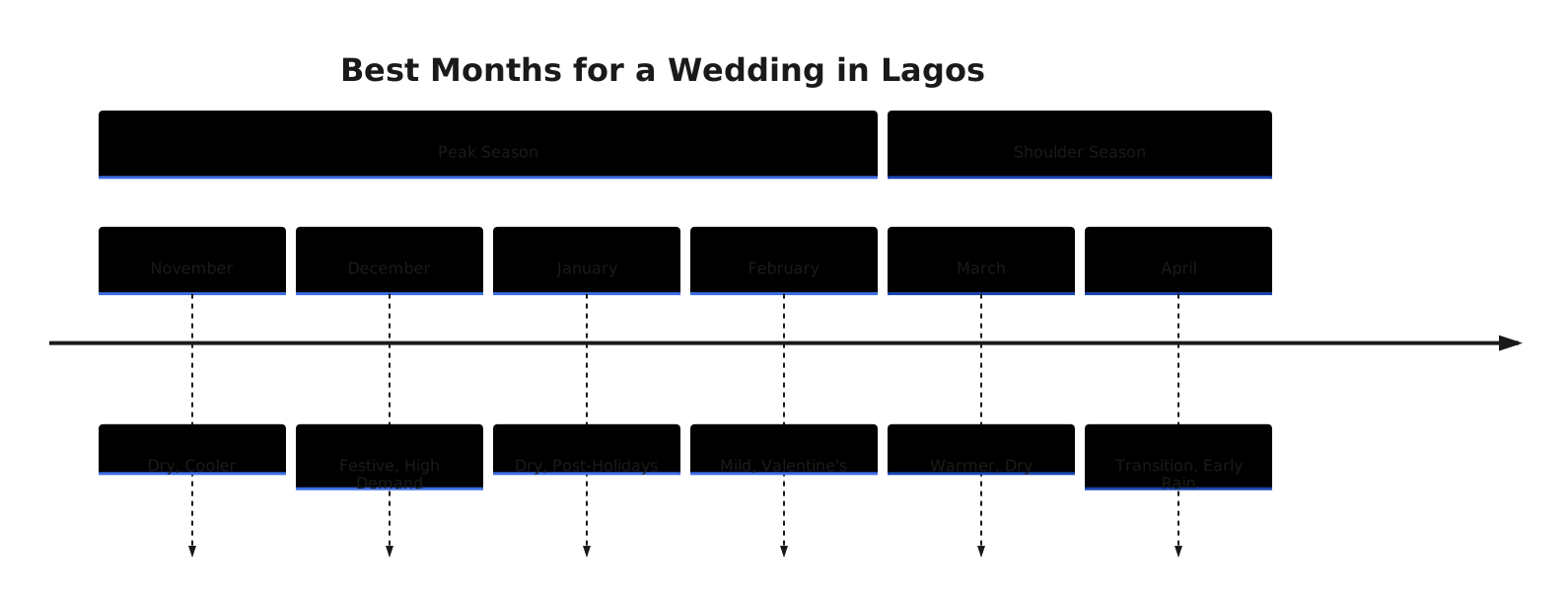
The best months for a wedding in Lagos are November, December, January, and February. This period falls squarely in Nigeria’s dry season, offering the highest probability of clear skies, lower humidity, and more predictable conditions for your ceremony and reception. While this peak season ensures beautiful weather, it also comes with higher demand for venues and vendors, requiring earlier planning and potentially larger budgets. Choosing a date within these months is the safest bet for an outdoor or indoor-outdoor event.
To determine the ideal wedding months, we analyzed several critical factors specific to Lagos. Our ranking is based on a synthesis of historical weather data, including average rainfall and temperature from sources like Time and Date, alongside practical considerations like major public holidays, seasonal vendor price fluctuations, and the infamous Lagos traffic. We also incorporated insights from local event planning realities, focusing on what practically works for couples and their guests in this vibrant city.
Understanding Lagos Weather Patterns: Dry Season vs. Rainy Season
| Factors | Dry Season (November – March) | Rainy Season (April – October) | |
|---|---|---|---|
| Weather | Mostly sunny, lower humidity, consistent | Intermittent heavy rainfall, high humidity, unpredictable | |
| Outdoor Venues | Ideal, minimal risk of disruption | Risky, requires robust backup plans | |
| Guest Attendance | Typically higher, easier travel | Potentially lower, travel challenges | |
| Demand & Cost | High demand, premium pricing | Lower demand, more competitive pricing | |
| Logistics | Smoother planning, fewer weather concerns | Requires detailed contingency planning for rain |
Lagos operates on three main seasons: the dry season, the rainy season, and Harmattan. Understanding their timing is the first step in selecting a wedding date.
- The Dry Season (November – March): This is the most sought-after period. It’s characterized by minimal rainfall, sunny skies, and lower humidity. Temperatures are warm, typically ranging from 28-32 degrees Celsius. This season is ideal for outdoor events, but it’s also the most expensive and competitive time to book venues and suppliers.
- The Rainy Season (April – October): This season brings frequent and heavy downpours, especially between June and September. Humidity is high, and the risk of flooding in parts of Lagos can create logistical nightmares. While venue prices may be lower, you absolutely need a solid indoor plan.
- Harmattan (December – January): This is a specific weather pattern within the dry season. It brings a dry, dusty wind from the Sahara, which can cause hazy skies and cooler nights. While it guarantees no rain, the dust can affect photography and may be uncomfortable for guests with respiratory issues.
The Best Months: A Deep Dive into Ideal Wedding Dates
Choosing your wedding month is a balance of weather, budget, and logistics. Here is a detailed breakdown of what to expect throughout the year in Lagos.
The Peak Months: November & December
This is prime wedding season in Lagos for a reason. The rains have subsided, and the festive atmosphere begins to build. November marks the confident start of the dry season, making it one of the absolute best months for a wedding in Lagos. December follows with a celebratory mood, but also brings the complexities of the Christmas holidays.
- Best for: Outdoor ceremonies, destination weddings for international guests, and couples who want the highest chance of perfect weather.
- Watch out for: Extremely high demand for top-tier venues and planners. Prices for everything from catering to decor will be at their peak. December dates compete with corporate end-of-year parties and holiday travel, making guest availability and traffic a significant challenge.
The Heart of the Dry Season: January & February
After the December rush, January offers a slight reprieve while retaining the excellent weather. The Harmattan haze often clears, and life returns to a normal pace. February continues the trend of beautiful, dry weather, making it a popular choice, especially around Valentine’s Day. These months provide the predictability of the dry season with slightly less chaos than December.
- Best for: Couples who want classic dry-season weather without the intense competition of December. It’s a fantastic time for clear, bright wedding photography.
- Watch out for: Harmattan dust can linger into early January. February’s association with Valentine’s Day can cause a spike in demand and pricing for romantic venues and services. You still need to book key vendors at least 12-18 months in advance.
The Shoulder Months: March, April & October
These months are transitional and carry both opportunities and risks. You might find better value, but the weather is less of a sure thing.
March is the tail-end of the dry season. It gets progressively hotter and more humid, and the first rains might make an appearance. It’s generally safe but lacks the crispness of January.
April brings a higher chance of rain as the wet season begins. It also contains the Easter holidays, which can be a pro (guests have time off) or a con (travel is expensive and venues may be booked for other events).
October is the flip side, marking the end of the rainy season. The rain becomes less frequent and intense, but downpours are still a real possibility. If you’re lucky, you can get dry-season weather at a rainy-season price.
- Best for: Couples with a flexible budget or those willing to risk a bit of rain for better vendor availability. A strong indoor backup plan is non-negotiable.
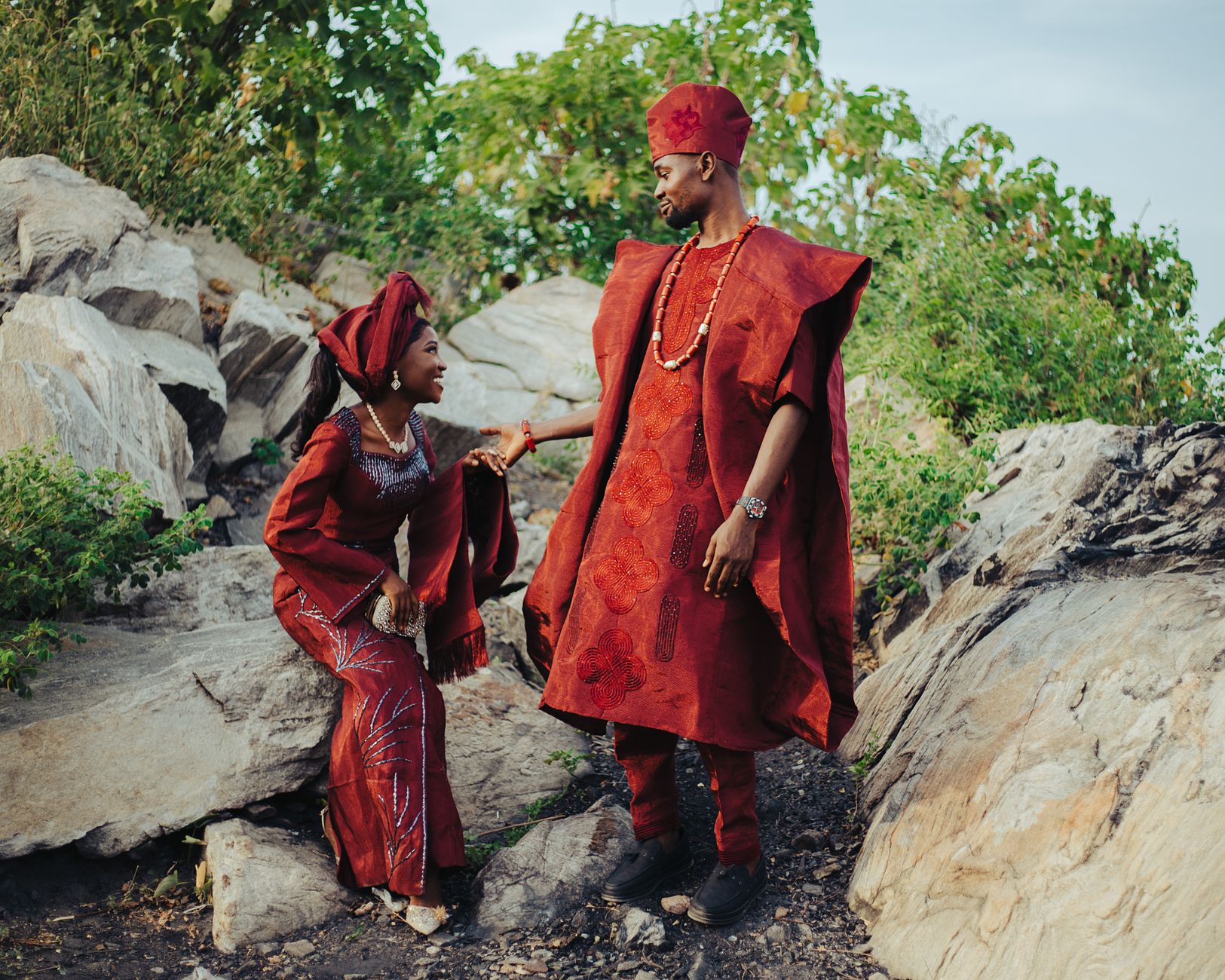
- Watch out for: Unpredictable weather is the main issue. A sudden downpour can ruin an outdoor setup. In March and April, the heat and humidity can be uncomfortable for guests in heavy traditional attire.
A Lagos wedding done well is genuinely unforgettable. A Lagos wedding done badly is a very public, very expensive disaster.
Harusi Hub Blog (blog.harusihub.com)
The Rainy Season: May to September
The words “rainy season wedding” can cause panic, but it’s not an impossible feat. Planning a wedding during these months requires a shift in mindset. Your primary plan must be an indoor one. This is where venue selection becomes paramount. You need a space that is beautiful on its own, without relying on outdoor scenery.
While May, June, July, and September are known for intense rainfall, August often has a short, drier spell known as the “August Break.” However, this break is unreliable and, as one source warns, a seven-day downpour isn’t uncommon, especially on the Island. It’s safer to treat the entire period as wet.
This season’s advantage is financial. With lower demand, venues and vendors may offer significant discounts. A wedding budget that might secure a basic package in December, perhaps in the ₦5M–₦15M range, could go much further in July.
- Best for: Couples on a tighter budget, those who love the idea of a cozy indoor celebration, and those booking on a shorter timeline.
- Watch out for: Flooding and traffic, which can be catastrophic. Guests may have difficulty traveling to your venue. Power outages are also more common, so ensuring your venue has reliable backup power is absolutely critical for an uninterrupted celebration. At Regal Castle, we provide backup generators to ensure the lights and music never stop, no matter the weather outside.
Don’t book a venue for its beautiful garden in July. Book it for its flawless interior and its guaranteed power supply.
Beyond the Calendar: Other Critical Timing Factors
Your wedding date isn’t just about the month. In Lagos, the day of the week and proximity to holidays matter just as much.
- The Day of the Week: Saturdays are the traditional choice, but they are also the most expensive and competitive. Friday weddings are gaining popularity, but you must account for rush hour traffic. Sunday weddings can be a great alternative, often with better pricing and less traffic, though some guests may need to leave early to prepare for the work week. The best day to hold a wedding in Lagos is often a Saturday for guest convenience, but a Sunday can be a smarter financial and logistical choice.
- Public Holidays & Festivals: Major holidays like Easter, Eid, and Christmas create long weekends, which seems great for guest availability. However, they also cause a surge in travel costs and can mean that many of your preferred vendors are already booked. Always check the calendar for public holidays before finalizing your date.
- Lagos Logistics: Traffic is a permanent feature of Lagos life. When choosing a date, consider the logistics for your guests and vendors. A venue like ours on 137 Ikotun-Idimu Road provides clear access, but travel time can double or triple depending on the day and time. Informing guests about the expected travel time is a crucial courtesy.
Lagos Wedding Seasons: A Comparison
| Season | Months | Weather | Cost & Availability |
|---|---|---|---|
| Peak Dry Season | Nov – Feb | Excellent (Sunny, low humidity) | High cost, low availability |
| Shoulder Season | Mar, Apr, Oct | Unpredictable (Mix of sun & rain) | Medium cost, medium availability |
| Rainy Season | May – Sep | Wet (Frequent, heavy rain) | Lower cost, high availability |
Frequently Asked Questions
What about a beach wedding in Lagos?
A beach wedding can be stunning but requires military-grade planning, especially around the weather. You are completely exposed to the elements. According to some Nigerian beach wedding guides, you must stick to the driest months (December to February) and have a fully secured, waterproof tent as a mandatory backup. Wind, sand, and tides are also major factors to manage.
How do I plan a successful wedding during the rainy season?
Embrace an indoor-focused celebration. Choose a venue that is spectacular inside, so you don’t feel like you’re missing out on an outdoor element. Prioritize a venue with a dedicated entrance or covered drop-off point to protect guests from the rain. Confirm they have a powerful, reliable generator. Finally, communicate with your guests about potential traffic delays and consider starting your ceremony a bit later to accommodate them.
Is the Harmattan season a problem for a Lagos wedding?
It’s a mixed bag. The good news is it guarantees no rain. The bad news is the dust. The fine haze can mute colors in your photos and create a less vibrant look. It can also be very uncomfortable for guests with allergies or asthma. If you’re planning a wedding in late December or January, discuss lighting and air filtration options with your venue and photographer.
What’s the best day of the week for a Lagos wedding?
Saturday remains the most popular day for guest convenience. However, Sundays often offer better venue pricing and significantly less traffic. A Friday evening wedding can also work, but you must account for the brutal end-of-week traffic which could severely delay your start time. The decision depends on whether your priority is maximizing guest attendance (Saturday) or optimizing budget and logistics (Sunday).
How many days do you need in Lagos for a wedding?
For a traditional Nigerian wedding involving multiple events, plan for at least 3 to 5 days. This typically includes the traditional engagement ceremony, a welcome party or rehearsal dinner, the main wedding day (church/mosque and reception), and a thank-you brunch. If you have many guests traveling from abroad, extending this to a full week allows for travel recovery and more social events.
Do wedding costs really change that much by month?
Yes, significantly. A venue that costs ₦X in July could cost 1.5x or 2x that amount for a Saturday in December. This applies to most in-demand vendors, including caterers, decorators, and photographers. The difference in overall budget can be substantial, with some weddings seeing costs vary from a ₦5M–₦15M range to upwards of ₦15M–₦50M+ based on scale and season.
Planning your special day requires careful thought about the time of year, especially in a city with dynamic weather and logistics like Lagos. By weighing the pros and cons of each season, you can choose a date that aligns with your vision and budget. Our team specializes in creating flawless weddings, and we are here to help you navigate these decisions. To see how we can bring your perfect day to life, no matter the month, we invite you to start a conversation with us.