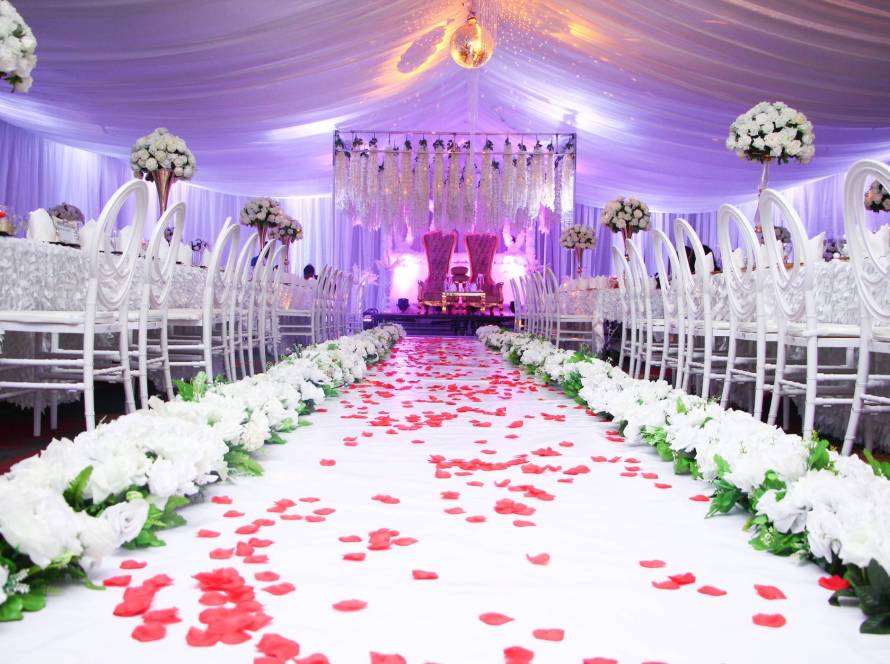
A venue that quotes you ₦4,000,000 and a venue that quotes you ₦4,000,000 aren’t the same price if one of them cuts its generator at hour four. The number on the contract means nothing without the questions behind it. Most couples tour a hall, admire the chandeliers, and sign. The ones who avoid a miserable reception day ask harder questions first, usually about things nobody photographs.
How should you evaluate guest capacity during a venue tour?
Start with the real number, not the hopeful one. A typical Nigerian wedding runs 300 to 500 guests or more, according to guidance from Event Design by BE, and that’s before you add the aunties who show up uninvited and the colleagues your fiancé forgot to mention. Whatever number you and your partner agree on, add 10 to 15% on top. Venues.ng recommends this buffer specifically because couples underestimate turnout almost every time, and a venue that’s “just right” on paper turns into a crush once the extra guests arrive.
Here’s the trade-off nobody mentions on the tour. A venue sized exactly to your invite list looks efficient in a floor plan sketch. It looks completely different at 7pm when 60 unexpected guests are standing because every chair is full. Ask the venue manager directly: what happens if we go over our contracted number? Some venues charge a per-head overflow fee. Others simply won’t let extra guests in, which is its own kind of chaos at a wedding.
Capacity also isn’t just a headcount, it’s a layout question. One widely cited luxury venue structure in Lagos splits its space into 90 guests indoors and 120 outdoors, for a combined 220, according to The Palmington’s vendor infrastructure guide. That split matters because an indoor-outdoor venue forces decisions about where the ceremony sits, where the reception sits, and how guests move between the two without bottlenecking at a single doorway. A venue advertising 1,000 capacity needs to show you how that number breaks down across hall, overflow tent, and outdoor space, not just state it as one round figure.

Ask to see the floor plan for a wedding close to your expected size, not the venue’s maximum theoretical capacity. A hall that “fits 1,000” standing at a product launch fits far fewer seated at round tables with a dance floor, a live band, and an aisle wide enough for a bridal train. Push the venue to walk you through an actual past floor plan at your guest count, not a brochure number.
One thing worth remembering: a bigger hall isn’t automatically the safer choice. If your realistic guest count is 400, booking a hall built for 1,000 can leave the room feeling empty and the acoustics strange, with sound swallowed by all that unused space. Match the room to the buffered number, not to the biggest room available.
Inspect back-of-house areas before reviewing vendor contracts
Most couples never ask to see the kitchen. That’s the mistake. Ayedu’s venue-selection checklist lists a physical site visit to inspect the kitchen and back-of-house operational space as a distinct step in the booking process, separate from touring the main hall. The chandeliers and the aisle carpet tell you nothing about whether your caterer can actually cook 600 plates of jollof without a breakdown by course three.
What changes once you’ve seen the back-of-house? Everything about your catering plan. A venue with proper staging infrastructure gives caterers direct access and workable flow between prep space and the reception floor, a standard described in The Palmington’s venue guide. Without that, your caterer is setting up chafing dishes in a corridor and carrying trays through a crowd of guests, and service slows to a crawl right when everyone’s hungriest.
Ask these questions on the walkthrough, not after you’ve signed:
- Where exactly will the caterer set up, and is that space separate from guest areas?
- Is there a dedicated loading entrance for catering vans, or will they share the main guest entrance?
- How far is the kitchen or staging area from the furthest table in the hall?
- Is there running water and proper ventilation in the staging space, not just a generator-powered extractor fan?
- Who cleans the back-of-house between the ceremony and the reception if both happen at the same venue?
If the venue manager can’t answer these without checking, that’s information too. A venue that’s hosted hundreds of large weddings should have these answers memorised.
This is also where you catch problems that no amount of good catering can fix later. A kitchen two floors below the reception hall, reached by a narrow staircase, means every tray of rice travels a route that guarantees some of it arrives cold or late. Walk that route yourself. Time it. If it takes four minutes one-way during a quiet tour, it’ll take longer during service with fifty guests crossing the same path.
Verify generator runtime to avoid electrical interruptions
NEPA will cut power during your reception. Plan around that fact, not around the hope that it won’t happen. The real question is how many hours of backup the venue includes in the booking fee, not whether it has a generator at all, because every venue has a generator.
A venue that only guarantees 3 to 4 hours for a full-day event is quietly pushing the cost and the risk of extra diesel back onto you, usually discovered the week of the wedding when there’s no time to negotiate.
Half-day bookings have a different, lower threshold: a minimum of 3 hours of covered runtime, built into the booking fee rather than billed separately, per the same source. If your event is a morning ceremony or an evening-only reception, 3 hours should already be included, not offered as an upgrade.
The question to ask directly: “How many hours of generator backup are included in my booking fee, and what happens if the event runs past that?” Get the answer in writing. A verbal promise of “we’ll sort it out” means you’re paying for extra diesel at whatever rate they decide on the night, with your guests sweating in the dark while someone goes to refuel.
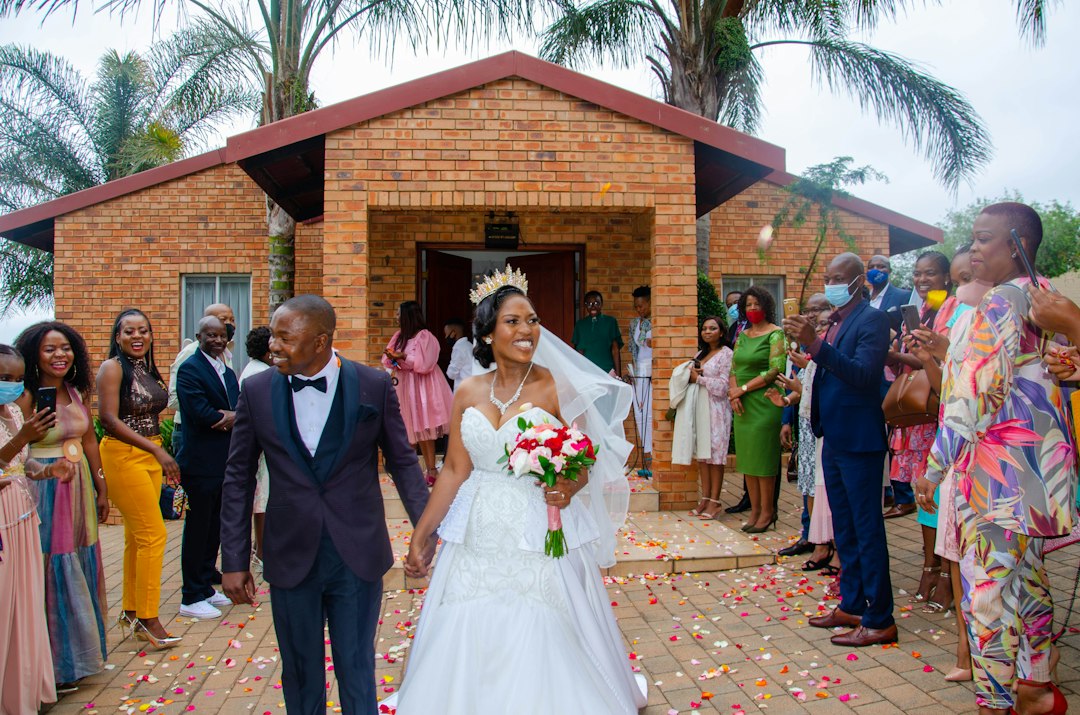
Cooling is the part people forget to tie to this question. Air conditioning for 500 to 1,000 guests draws serious power, and if your generator coverage runs out before your reception ends, the first thing to fail isn’t the lights, it’s the cooling. Guests in heavy aso ebi fabric in a hall with dead air conditioning will remember that far longer than they’ll remember the cake design. Ask specifically whether the quoted generator hours account for full air conditioning load across the whole guest capacity, or just lighting and sound.
Why should you evaluate open catering policies during the walkthrough?
Food decides whether your wedding feels generous or feels stingy, and most couples don’t get to choose who cooks it. More than 51% of couples rate food and drink as the single most important element for their guests, according to a study by The Knot cited in Regal Castle’s guide to catering policies. When a venue locks you into its in-house kitchen, you lose control over the one thing your guests will judge the loudest.
The money behind that risk is substantial. Venue and catering together take up nearly 30% of a couple’s total wedding budget, per a Brides.com survey referenced in the same guide. Venues with mandatory in-house catering often build their profit margin directly into the price per head, so the “convenience” of one-stop booking is rarely free, it’s priced in.
The question that addresses this risk directly is simple: does this venue allow outside caterers, or am I locked into their kitchen? Separating the venue rental fee from the food service contract lets couples solicit competing quotes from independent caterers and compare pricing and quality directly, rather than accepting a single non-negotiable in-house menu. Couples who make this separation can save up to 40% on their food and beverage bill, according to Regal Castle’s guide. That’s not a small adjustment to a wedding budget, that’s the difference between an aso ebi upgrade and a hole in your savings.
Ask the venue these follow-ups specifically:
- Is outside catering permitted, or only in-house?
- If outside catering is allowed, is there a corkage or kitchen-access fee, and how much?
- Does the venue require us to use their bar service even if the kitchen is open?
Below is a quick comparison of what each catering arrangement typically means for your planning.
| Catering model | Who controls the menu | Typical cost impact | Main risk |
|---|---|---|---|
| Mandatory in-house catering | Venue sets fixed packages | Profit margin built into price per head | Little room to negotiate or swap vendors |
| Open catering with corkage fee | You choose any caterer, pay venue a fee | Fee plus caterer cost, but competitive bidding possible | Fee amount varies and should be confirmed in writing |
| Fully open catering, no restriction | You choose and negotiate freely | Most competitive, up to 40% savings reported | Requires more coordination between caterer and venue staff |
A fully open policy shifts more planning work onto you, since you’re now managing a caterer relationship the venue isn’t responsible for. That’s a fair trade if it saves a meaningful amount of your budget, but it only works if the venue’s back-of-house space (from the earlier inspection) can actually support an outside catering team.
FAQ
How much generator backup should a Lagos event venue guarantee for a full-day wedding?
A full-day wedding booking should include a minimum of 8 hours of covered generator runtime in the booking fee, enough to cover vendor load-in through event close, based on the infrastructure standard described by The Palmington. Anything less and you risk negotiating extra diesel costs on the day itself, with no use to push back.
What guest count buffer should I add when touring a venue?
Add 10 to 15% above your minimum expected attendance, as recommended by Venues.ng. If you expect 400 confirmed guests, plan your seating and catering around roughly 440 to 460, since Nigerian weddings routinely exceed the initial guest list.
Should I ask to see the kitchen before signing a venue contract?
Yes, and do it before reviewing any vendor contract. Ayedu’s checklist treats a physical inspection of the kitchen and back-of-house area as a required step during the site visit, separate from touring the main hall, because the hall’s appearance tells you nothing about whether your caterer can actually operate there.
Does separating venue and catering actually save money?
It can, substantially. Couples who book a venue separately from catering and shop independent caterers against each other have reported savings of up to 40% on their food and beverage bill, according to Regal Castle’s guide to open catering policies. The saving comes from competition between caterers, not from any single caterer being cheaper by default.
Skip any of these questions and you’re gambling with the one day you can’t reschedule. A venue that hedges on generator hours, won’t show you the kitchen, or insists on its own catering menu is telling you something about how the rest of the planning will go. Walk through every item above before you pay a deposit anywhere, and if a venue manager gets defensive about answering them, treat that as your answer. Contact Regal Castle to talk through your next step.