An event venue tour is the critical inspection where your event’s vision is tested against physical reality. A productive tour goes beyond admiring the space; it involves a methodical assessment of capacity, logistics, costs, and policies to ensure the venue can deliver your specific requirements. This means arriving prepared with a clear budget, guest count, and a detailed list of questions that cover everything from power supply and security to vendor restrictions and payment schedules. A successful tour confirms not just a venue’s beauty, but its operational fitness for your event.

What to Expect During a Tour
A professional event venue tour follows a structured process. Upon arrival, you will be greeted by a venue manager or a dedicated tours coordinator. This person is your guide and primary source of information. The first part is usually a comprehensive walk-through of the spaces relevant to your event. This includes the main hall, any breakout rooms, outdoor areas, guest suites, and restrooms. Pay attention to the condition of the facilities, the ambiance, and the natural light.
Following the physical tour, you will typically sit down with the manager for a detailed discussion. This is where you can ask your prepared questions. They will present their packages, pricing (which should be discussed in Nigerian Naira), and available dates. A well-run tour concludes with a clear understanding of what the venue offers, what is included in the price, and what the next steps are for booking. You should leave with a brochure, a sample contract, or a detailed email proposal to follow.
Preparing for Your Venue Visit
Walking into a venue unprepared is a missed opportunity. To make your event venue tour effective, complete these preparatory steps before you arrive. This preparation ensures you can get specific, relevant answers instead of vague possibilities.
- Draft Your Budget: Have a realistic budget in Naira. Know your absolute maximum for venue hire, and if possible, have it broken down into essentials like space rental, catering, and technology.
- Estimate Your Guest Count: A venue’s suitability is fundamentally tied to its capacity. Have a minimum and maximum guest count. This affects everything from cost to layout. Our spaces, for example, are designed for events between 500 and 1000 guests, so knowing your number is crucial.
- Shortlist Your Dates: Have two or three ideal dates or at least a preferred month and day of the week. Venue availability is often the first hurdle. Booking on a weekday versus a weekend can also have a significant impact on pricing.
- Define Your Non-Negotiables: What are the absolute must-haves for your event? This could be a requirement for an outdoor ceremony space, a need for breakout rooms, specific accessibility features, or the ability to bring in your own caterer.
- Compile Your Questions: Do not rely on memory. Write down every question you have, organised by category (costs, logistics, technology, policies). We will cover key questions in the next section.

The Essential Questions to Ask
Your list of questions will be your most powerful tool during the tour. A venue manager expects and welcomes detailed questions; it shows you are a serious planner. Organise your queries to ensure you cover all critical areas.
Capacity and Layout
First, confirm the absolute maximum capacity for the styles you are considering (banquet, theatre, cocktail). Ask for a floor plan. How does the capacity of 500 to 1000 guests change with different table arrangements? Where are the electrical outlets, and are they sufficient for your AV team and DJs? Is there a designated space for a stage, a dance floor, or a registration desk? Can you see how our beautifully designed event venue guide can be adapted to your vision?
Costs and Inclusions
This is where precision is vital. Ask for a full cost breakdown in Naira. What is the base rental fee? What exactly does it include (chairs, tables, basic lighting)? Are there separate charges for staff, security, or cleaning? Ask about the payment schedule, the deposit amount required to secure a date, and the cancellation policy. It is critical to understand what is not included; these are the items that can quickly inflate a budget. Be sure to ask about their policy on Value Added Tax (VAT) and if it is included in the initial quote.
Policies and Restrictions
Every venue has rules. Are there restrictions on vendors, or must you use their preferred list? What are the policies on alcohol (corkage fees, licensed bartenders)? Are there noise restrictions or a mandatory end time for music? If you are planning a wedding or party with extensive decorations, ask what is permitted. Can you hang items from the ceiling or walls? When can your vendors get access for setup and breakdown? These details are often what separates a smooth event from a stressful one.
Who to Bring on Your Tour
Deciding who accompanies you on a wedding venue tour or corporate site visit can streamline your decision-making process. Bringing too many people can lead to conflicting opinions, while coming alone means you might miss a key detail that a fresh pair of eyes would spot. The key is to bring the primary decision-makers.
For a wedding, this typically means the couple. Some also choose to bring a parent or a trusted planner. According to event experts, it’s wise to limit your initial tour party to those whose opinions matter most to avoid confusion. For corporate events, the core decision-making team might include the event lead, a representative from marketing, and perhaps a senior executive if the event is of high strategic importance. The goal is to have the people present who hold the budget and the final say.
The purpose of the first tour is to assess the venue against your core criteria, not to achieve universal consensus among friends and extended family.
Virtual, In-Person, and Hybrid Tours
Technology has changed how we first interact with venues. Today, you have more options than just a traditional in-person visit. Each format has distinct advantages for planning an event.
The Efficiency of Virtual Tours
Virtual tours, using 3D photography and video, allow you to walk through a venue from anywhere in the world. This is incredibly efficient for creating a shortlist. You can disqualify venues that clearly do not fit your aesthetic or size requirements without spending time and money travelling across Lagos. High-quality virtual tours can shorten the sales cycle by allowing planners to make informed decisions faster. They are an excellent screening tool.
The Value of an In-Person Visit
There is no substitute for experiencing a space in person. A physical tour allows you to feel the ambiance, assess the quality of finishes, check the acoustics, and even notice smells. You can gauge the professionalism of the staff firsthand. This is your chance to verify that the polished photos and videos match the reality of the venue.
The Rise of the Hybrid Approach
Many planners now use a hybrid model. They start with virtual tours to create a shortlist of two or three top contenders, then conduct in-person visits only for those finalists. This combines the efficiency of digital screening with the irreplaceable sensory input of a physical walk-through.
| Feature | In-Person Tour | Virtual Tour | Hybrid Approach |
|---|---|---|---|
| Convenience | Low (Requires travel) | High (Accessible anywhere) | Medium (Reduces travel) |
| Sensory Detail | High (Ambiance, feel, acoustics) | Low (Visual only) | High (For final contenders) |
| Time Efficiency | Low (Time-intensive) | High (Quickly screen many) | High (Best of both) |
| Initial Screening | Poor | Excellent | Excellent |
| Final Vetting | Excellent | Poor | Excellent |
Analysing Venue Layout and Flow
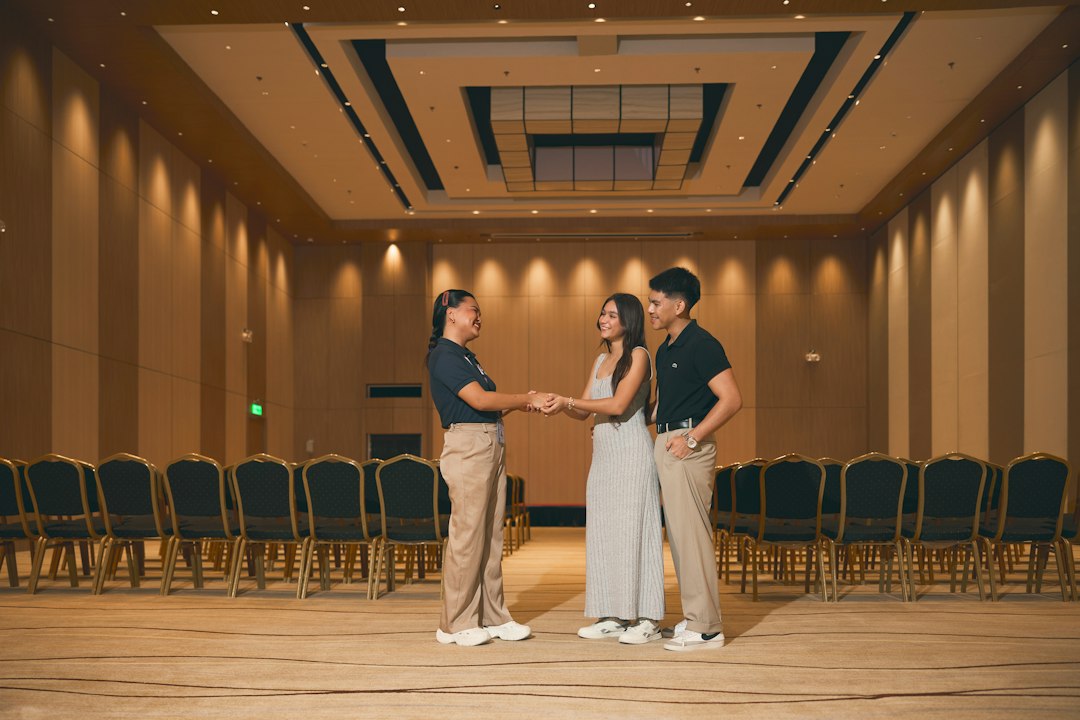
An empty hall can be deceptive. During your event venue tour, your job is to mentally place your event into the space. Visualise the entire guest journey from arrival to departure. Where will they park and enter? Where does the registration or welcome drinks area go? Consider the flow of traffic between the main area, restrooms, and any outdoor spaces. Is there a logical place for the catering buffet that does not create a bottleneck?
Ask if the venue can provide 3D diagrams or layout software mockups. These tools are invaluable for space planning. Seeing a digital rendering of your chosen table setup can highlight potential issues with sightlines or movement that are not obvious in an empty room. This visualisation is a key part of understanding if a venue can truly accommodate your event’s specific operational needs, not just the guest count.
Understanding Different Room Setups
Venue capacity is not a single number; it is a variable that depends entirely on the room setup. A hall that holds 1,000 people for a theatre-style presentation may only hold 500 for a banquet with a dance floor. You must discuss your specific needs with the venue manager. Common setups include:
- Theatre Style: Rows of chairs facing a stage. Best for conferences and presentations. Maximises seating capacity.
- Banquet Style: Round tables of 8-10 guests. The standard for weddings and galas, encouraging conversation.
- Classroom Style: Rows of tables with chairs facing a stage. Ideal for training sessions where guests need to take notes.
- Cabaret Style: Round tables with chairs arranged in an arc facing the stage, so no one has their back to the front.
Understanding these basic event seating arrangements helps you have a more productive conversation with the venue manager about how to best use their space for your specific program.
The Importance of Personalisation
A venue’s approach to the tour itself is often a reflection of their service quality. Did they ask about your event beforehand? Do they refer to it by name? A generic, one-size-fits-all tour can be a red flag. The best venues personalise the experience. They might pre-set a room in the style you are considering or have a welcome sign with your name or company logo.
This level of detail shows they are not just selling a space; they are partnering with you to create an experience. It demonstrates attention to detail and a customer-centric approach. If the team makes you feel valued and understood during the sales process, it is a strong indicator of the service you will receive on your event day. Consider how the venue team speaks about their offerings and if they are actively trying to solve your specific event challenges.
Logistics, Safety, and Accessibility
The glamour of a venue is important, but the practical logistics are what make an event run smoothly. Your tour must include a thorough inspection of these backstage elements. Where is the loading dock for vendors? Is there a dedicated kitchen space for caterers? What is the power situation; are there enough circuits, and is there a backup generator? In Lagos, consistent power is a non-negotiable.
Safety is paramount. Ask about their security protocols. At Regal Castle, for instance, our entire property is monitored by 24/7 CCTV surveillance to ensure guest safety. What are their emergency procedures? Also, walk the path a guest with mobility challenges might take. Is the entrance accessible? Are there accessible restrooms? A great event is one where every single guest feels safe and comfortable.
Backup generators, vendor access routes, and security protocols are not glamorous topics, but a failure in any of them can ruin an event far more quickly than a poor colour scheme.
The Post-Tour Follow-Up
The tour is not the end of the process. How both parties handle the follow-up is critical. A professional venue will send a summary of your discussion within 24-48 hours. This should include a formal proposal, tailored to your discussed requirements, with clear pricing, a list of inclusions, and a sample contract. They should also provide a direct point of contact for any further questions.
As the client, your work is to review your notes while they are fresh. Compare the proposal against your budget and your non-negotiable list. If you have toured multiple venues, create a simple comparison sheet. Do not hesitate to go back with clarifying questions. A prompt and thorough response from the venue is another positive sign. If a venue is slow to respond or sends a generic, untailored proposal, consider it a reflection of their organisational standards.
Making Your Final Decision
Choosing your event venue is one of the biggest decisions you will make in your event planning journey. After completing your tours and reviewing your proposals, consolidate the information. Look beyond just the price in Naira. Consider the value, the service quality you observed, the flexibility of the space, and the professionalism of the team.
Review your initial list of non-negotiables to ensure your final choice meets every critical requirement. Before signing anything, read the contract carefully and perhaps have it reviewed, especially for clauses related to cancellations and liabilities. A great venue partner makes the rest of your planning easier. To see if our venue is the right fit for your vision, you can schedule a tour with our team today.